
.png)
How to onboard remote employees: The Complete Playbook for Success

Let's be real, getting remote onboarding right is a huge challenge. A lot of managers I talk to are constantly worried about new hires feeling disconnected, taking forever to get up to speed, or worse—leaving within the first few months. The stakes are high, but nailing this process is a massive opportunity.
A killer remote onboarding experience isn’t just about ticking boxes on a checklist. It's your first, and maybe best, chance to build a strong, tight-knit culture and give yourself a real competitive edge.
Why Mastering Remote Onboarding Is a Game-Changer
With so many of us working remotely or in hybrid setups, that first impression is more critical than ever. You can't rely on those spontaneous office chats or hallway bump-ins anymore. Every single interaction has to be deliberate.
When you get it wrong, the fallout is fast and expensive. It's a tough pill to swallow, but a staggering 42% of fully remote new hires have called their onboarding experience 'truly terrible.' Research also shows that only 12% of employees feel their company is great at onboarding, and they link that failure directly to people quitting. If you want to dive deeper, you can discover more insights about how poor onboarding impacts retention.
Moving Beyond the Basics
A successful program is about so much more than just shipping a laptop and setting up a few intro calls. It’s about creating a genuine sense of belonging and making people feel psychologically safe from the moment they sign their offer letter.
This guide isn't about high-level theory. It's a practical, step-by-step playbook designed to help you turn onboarding from a logistical headache into your secret weapon for engagement. We'll walk through actionable steps and real-world examples to build a system that makes every new hire feel welcomed, valued, and ready to hit the ground running.
A great onboarding experience is the bridge between a great hire and a great employee. It’s the company's first promise to its new team member—a promise of support, clarity, and inclusion.
To pull this off, you need to focus on three key things:
Clarity: This means setting crystal-clear expectations for the role, handing them a structured schedule for their first few weeks, and making sure all the info they need is super easy to find. No guesswork.
Connection: You have to be intentional about building relationships. This involves planned social meetups (even virtual ones!), a solid buddy system, and making sure they connect with their manager, teammates, and people across the company.
Confidence: The goal here is to equip new hires with the tools and early wins they need to feel competent right away. When they start contributing and see their impact, their confidence soars, and they become fully productive way faster.
The Pre-Boarding Phase: Setting the Stage for Day One
The time between a candidate signing their offer and their actual start date is one of the most overlooked parts of the onboarding journey. I've seen it time and time again—this "pre-boarding" phase is a golden opportunity to show your new hire that you’re organized, thoughtful, and genuinely thrilled to have them join the team.
Think about it. This is your chance to move beyond pure logistics and start building a real human connection before the pressure of day one even kicks in. A killer pre-boarding experience can replace those new-job jitters with genuine excitement. Imagine your new hire getting a welcome video from the team or a clear first-week agenda that puts their mind at ease. These little things set the tone for their entire time with your company.
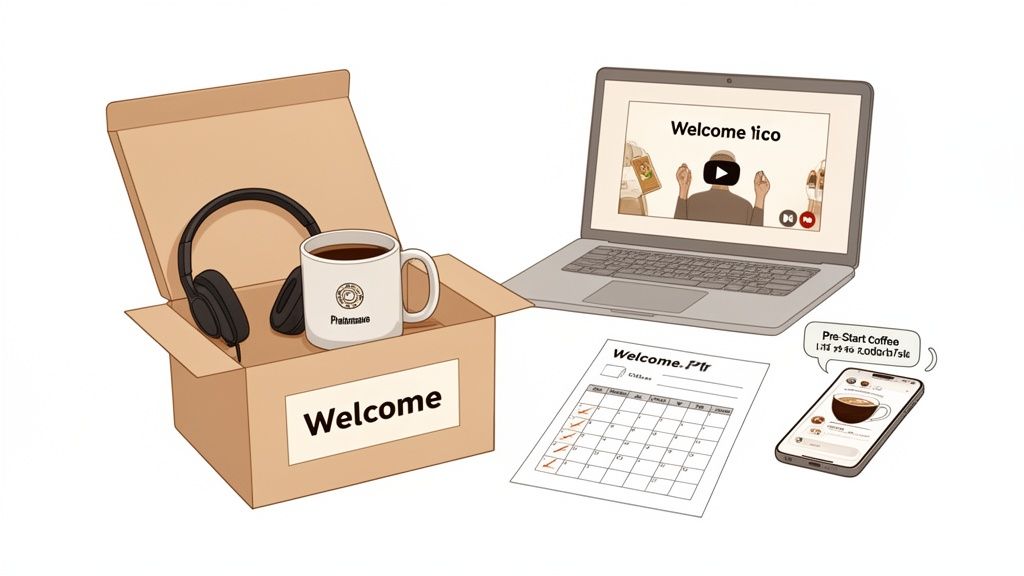
The numbers don't lie. A strong onboarding process leads to some pretty amazing results: employee retention jumps by 82%, productivity gets a 60% boost, and overall satisfaction climbs 53%. On the flip side, a rocky start can be a disaster. A shocking 33% of new hires start looking for another job within six months, and they often point to a bad onboarding experience as the reason.
Nail the Logistics Early
Getting the administrative and tech details sorted out before day one is non-negotiable for a smooth start. Seriously. It prevents a frustrating first day full of password resets and access requests, letting your new person focus on what really matters: learning their role and connecting with their new colleagues.
Your goal here is to make them feel prepared, not overwhelmed. To get these initial steps handled efficiently, you might want to look into how specialized systems can help. Exploring options like dedicated HR software onboarding can automate a ton of the paperwork and ensure nothing falls through the cracks.
To help you get started, here's a quick checklist of the essentials you need to cover before your new hire's first day. Think of it as your game plan for getting all the behind-the-scenes work done right.
Essential Remote Pre-Boarding Checklist
Category | Task Description | Why It Matters |
|---|---|---|
Administrative | Send and collect all necessary paperwork (contracts, tax forms, etc.) digitally. | Avoids a first day buried in forms and gets the legal stuff out of the way. |
Technical | Order and ship all necessary equipment (laptop, monitor, mouse) to arrive a few days early. | Ensures they can hit the ground running without tech delays or stress. |
Technical | Pre-configure accounts and grant access to essential software (email, Slack, project management tools). | Prevents the dreaded "I can't log in" saga on day one. |
Cultural | Ship a thoughtful company welcome kit. | Makes a tangible, memorable first impression and fosters a sense of belonging. |
Logistical | Send a detailed first-week agenda, including key meetings and who they'll meet. | Reduces anxiety by setting clear expectations and showing you have a plan for them. |
Cultural | Assign an onboarding buddy and schedule a brief intro call before their start date. | Provides a friendly, go-to person for informal questions and immediate connection. |
Logistical | Send a welcome email from their manager a few days before they start. | A personal touch that builds rapport and makes them feel seen and valued. |
Ticking off these items doesn't just clear a to-do list; it builds a foundation of trust and shows your new team member that you've got their back from the very beginning.
Create a Sense of Belonging Before Day One
While logistics are crucial, it’s the human touch that makes a pre-boarding experience truly memorable. This is your chance to make your new hire feel like they’re already part of the crew before they’ve even logged into their first meeting.
One of the most powerful ways to do this is with a well-thought-out welcome kit. And I’m not just talking about a laptop and a mouse.
Company Swag: A high-quality branded hoodie, water bottle, or notebook goes a long way. It helps build a sense of identity right off the bat.
A Personal Touch: I’m a huge fan of a handwritten welcome note from the direct manager or even the CEO. It shows genuine care and excitement.
Practical Office Supplies: Think about including a nice pen, a planner, or a gift card to a local coffee shop to help them spruce up their home office.
Team Favorites: Why not add a fun, personal element like the team's go-to snack or a book that’s had a big impact on your company culture?
This simple gesture shows you've invested in them as a person, not just as another employee. It’s a tangible piece of your company culture.
Pre-boarding isn't just a checklist of tasks to complete; it's the first chapter of your new employee's story with your company. Make it a compelling one.
Give Them a Sneak Peek
Another great move is to give new hires controlled, low-pressure access to a few key tools and bits of information. It helps take the mystery out of what their new environment will be like. For instance, you could use a tool like Beep to whip up a simple pre-boarding task board.
This board could have just a few light items on it:
Watch a welcome video from the team.
Take a look at the first-week agenda.
Read through the company's mission and values.
This gives them a little window into team workflows without any pressure to perform. Plus, it gets them comfortable with the tools they’ll be using every day. If you’re building out your tech stack, you can also check out our guide on the top remote collaboration tools for more ideas.
And here’s one more pro tip: scheduling a brief, casual coffee chat with their manager a few days before they start is a fantastic way to break the ice and build a solid rapport from day zero.
Crafting an Engaging First Week Itinerary
That first week for a remote hire is make-or-break. It's all about striking the right balance between structured learning, genuine connection, and actual work—not just drowning them in a sea of documentation. You've got to move beyond a generic calendar full of meetings and design a week with specific, meaningful activities that build real momentum.
Let's be honest, an unstructured start leaves new hires feeling lost and unproductive, which is the last thing anyone wants.
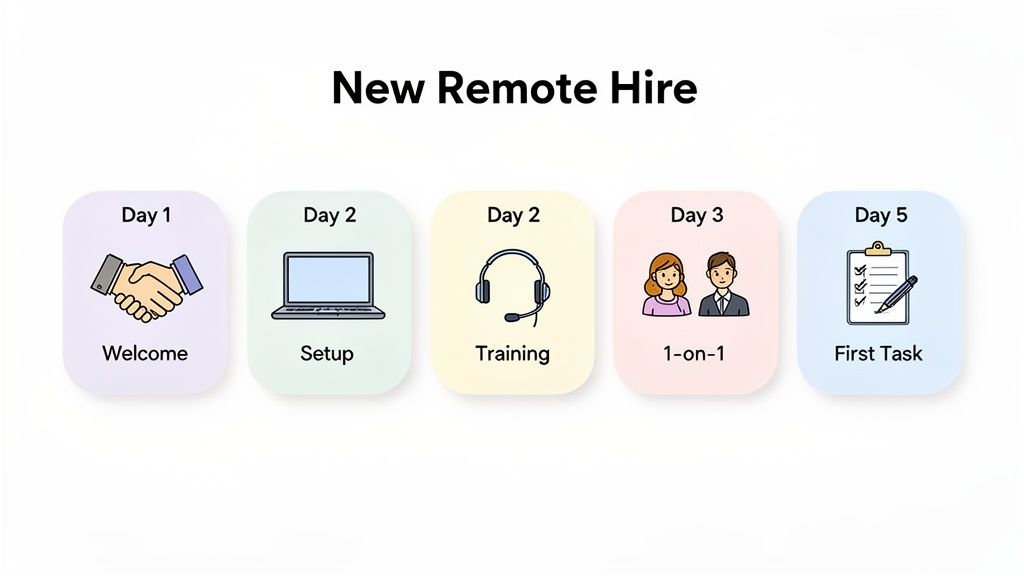
I always recommend sharing this itinerary during the pre-boarding phase. It calms those new-job jitters and sets crystal-clear expectations. It's a simple way to show you’ve actually put thought into their arrival and are ready to bring them into the fold. The goal here is to make every scheduled event count, so they sign off on Friday feeling confident, connected, and completely clear on their role.
Day One Is All About the Welcome
The first day sets the tone for everything. Your only two jobs today are to provide a warm, human welcome and ensure a totally stress-free tech setup. Seriously, avoid diving into deep, complex work topics. That can wait.
Kick things off with a team-wide virtual welcome call. And I don't mean a quick "hello." This is a chance for everyone to introduce themselves and share one fun fact, making the new person feel like part of the crew from minute one. Right after that, get them into a dedicated IT session to make sure every piece of equipment, every account, and all their software access is working perfectly.
The most important meeting of the day, though, is the one-on-one with their direct manager. This session needs to cover:
A casual chat to build a personal connection.
A quick walk-through of their first-week plan.
An overview of how the team communicates (e.g., "We use Slack for quick questions, email for formal updates.").
Reassurance that it’s okay to ask questions—and that you expect them to ask a lot of them.
Day one is a success if the new hire logs off feeling welcomed and equipped, not exhausted and overwhelmed.
Days Two and Three: Diving Deeper
With the initial welcome out of the way, the next couple of days are for adding role-specific context and building key relationships. This is when you start connecting the dots between their job and the company's bigger mission. I've found it's best to structure these days with a mix of learning sessions and personal introductions.
Schedule a bunch of 30-minute one-on-ones with the key cross-functional partners they'll be working with. Pro tip: give the new hire a few icebreaker questions beforehand. It makes these conversations feel way less awkward and helps them start building their internal network right away.
These days are also perfect for initial, hands-on training. For instance, a new software developer could pair-program with a senior engineer for an hour just to get a feel for the codebase. A new salesperson? Have them shadow a few discovery calls to see the product pitch in action. The focus should be on practical, observational learning, not memorizing manuals.
The goal of a remote first week isn't to hit peak productivity. It's to build the foundation of knowledge, relationships, and confidence that makes long-term productivity even possible.
Days Four and Five: Transitioning to Action
By the end of the week, your new hire should be itching to move from pure learning to hands-on, low-stakes tasks. This shift is crucial for building their confidence and making them feel like they're actually contributing. The key is to assign work that's meaningful but has a safety net.
For example, a new content writer could be asked to outline their first blog post or give feedback on an existing article. A designer might be tasked with creating a few social media graphics using established brand templates. Simple, but effective.
This is also a golden opportunity to make tool training super relevant. Let's say a new marketer needs to learn your team's project management software. Instead of a generic tutorial, have them review a draft of a new landing page and provide feedback using a tool like Beep.
With Beep, they can add comments directly onto the webpage itself, and each comment automatically creates a task in a kanban board. This one simple exercise accomplishes three things at once:
They learn the company's visual feedback process.
They get familiar with a core marketing asset.
Their feedback is captured as an actionable task, showing them exactly how their contributions plug into the team's workflow.
This approach makes training practical and immediately reinforces their value. Wrap up the week with a final one-on-one with their manager to recap everything, answer any last questions, and set clear, achievable goals for week two.
Building Culture and Connection Across Distances
So, how do you make someone feel like they're truly part of the team when they've never set foot in the office? It’s the million-dollar question of remote work. All those little moments—the casual chats by the coffee machine, the inside jokes, the shared lunches—that build a team’s vibe just don't happen on their own when you're distributed. You have to create them.
Without that intentional effort, a new hire can quickly feel like they’re on an island, tethered to the company only by a list of tasks. To really get them immersed in your culture, you need to build systems that spark genuine human connection and make them feel like a person, not just another icon on a screen.
The Power of a Buddy System
One of the single most effective things I’ve seen work is a solid buddy system. When you pair a new hire with a seasoned team member (who isn't their manager), you give them a safe, informal lifeline for all the "silly" questions they'd probably hesitate to ask their boss.
Think of a buddy as their guide to the unwritten rules of the company.
Who's the go-to person for marketing analytics questions?
What’s the real vibe on Slack—are GIFs a yes or a no?
How do people actually handle their lunch breaks?
This peer-to-peer relationship is gold for building psychological safety and a sense of belonging from day one. It gives the new hire an immediate ally and a friendly face in a sea of new names, which massively speeds up how quickly they feel woven into the team's social fabric.
A buddy isn't just an FAQ bot; they are a new hire's first real connection to the company's culture. They translate the employee handbook into how things really get done around here.
Replicating the Watercooler Moments
Those spontaneous "watercooler" chats are what remote teams miss the most. You can't perfectly replicate them, but you can create digital spaces that serve the same purpose: casual, non-work talk that builds real rapport.
Set up dedicated channels just for this. A or channel in Slack, for example, gives everyone a place to share weekend photos, cool articles, or funny memes. It's where personalities start to shine through. To kickstart that feeling of connection, consider sending a well-thought-out welcome kit with some high-quality branded merchandise for business.
Managers can also play a huge part here by deliberately carving out time for informal connection. I always start my team meetings with five minutes of non-work chat. Ask people about their weekend or a new show they're binge-watching. It’s a small gesture, but it signals that the team values each other as people, not just for their output. Tackling these remote work hurdles is a common challenge; you can dive deeper into our guide on the top virtual team challenges and how to overcome them.
Making Virtual Team Building Actually Fun
Let's be honest, the phrase "virtual team-building" can make even the most upbeat employee groan. The trick is to skip the forced fun and pick activities that are genuinely engaging and low-pressure.
Here are a few ideas I’ve seen actually work wonders:
Virtual Escape Rooms: These get people collaborating and problem-solving together in a fun, no-stakes environment. It’s a great way to see how the team works together.
Team Trivia: Fire up a tool like Kahoot! to host a trivia session. Mix in some general knowledge with a few quirky, company-specific questions.
Show-and-Tell: It sounds simple, but this is surprisingly effective. Ask each person to share an object from their desk or home that has a cool story behind it.
Activities like these help break down the formal barriers and let coworkers see each other as more than just a name on a screen.
And this isn't just fluff—the data backs it up. While 55% of employees now prefer a hybrid setup and 26% want to be fully remote, these new hires are nearly 50% more likely to miss out on important cultural cues. That’s a massive gap, especially since a strong connection to the culture is a huge reason people stick around. Making culture a priority isn't just a nice-to-have; it's a core part of your retention strategy.
Structuring a 30-60-90 Day Plan for Remote Success
A fantastic first week is just the starting line. The real journey from a promising new hire to a fully autonomous, high-impact team member happens over the next three months. This is where a well-structured 30-60-90 day plan becomes your secret weapon for guiding remote employees.
Without a clear roadmap, new hires can feel adrift, unsure of what to prioritize or how they're even supposed to measure their own progress. This plan replaces that ambiguity with clarity. It lays out a path with real milestones that build confidence and get them up to speed way faster.
Over these 90 days, you’re not just training them on tasks; you're building genuine connections.
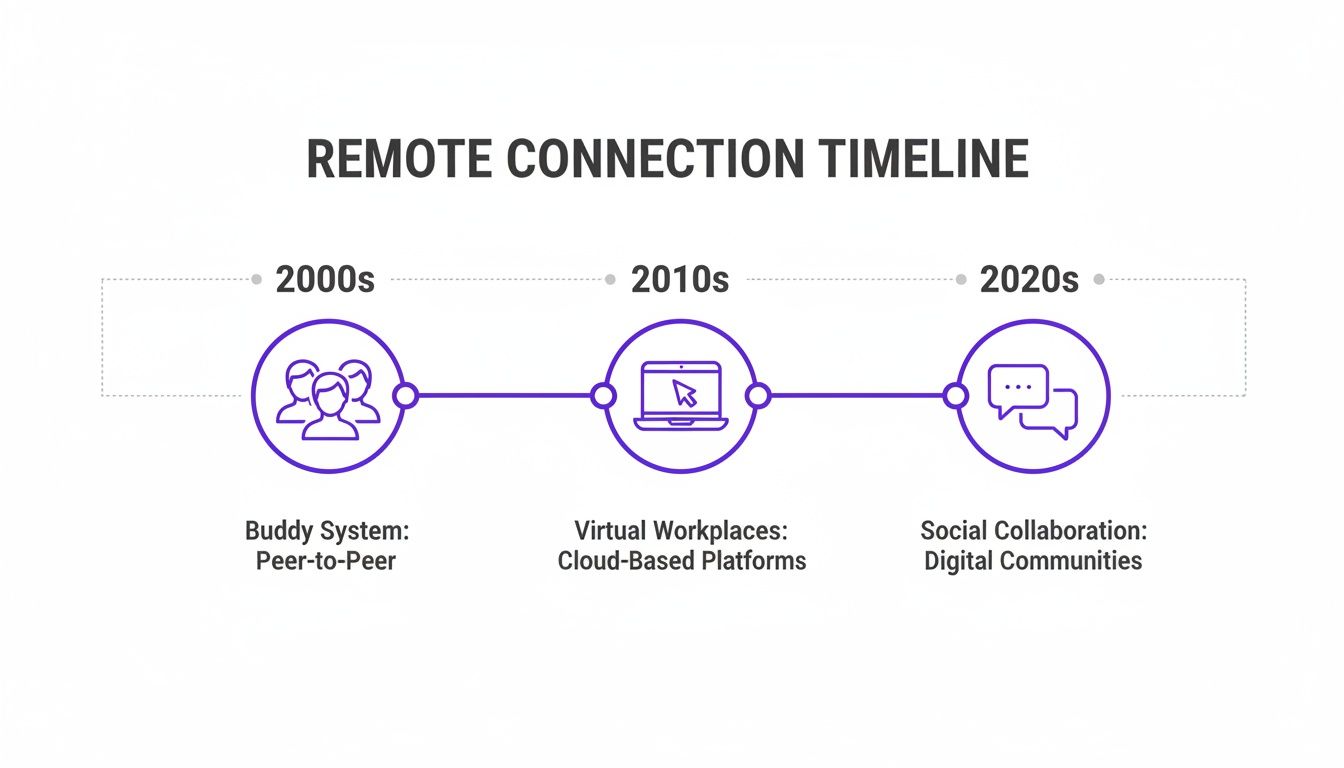
It all works together—peer support, digital collaboration, and informal community chats all play a massive part in making someone feel like they truly belong.
The First 30 Days: Learning and Integration
The first month is all about absorption. Your new hire's main job should be learning: soaking up the company culture, getting the hang of essential tools, building relationships, and really understanding their role. Productivity isn't the goal here; a solid foundation is.
Set clear, achievable learning goals. For a new developer, maybe it's successfully merging their first small, non-critical pull request. For a marketer, it could be mapping the customer journey and putting together a competitive analysis.
Key activities for this phase usually look like this:
Completing all role-specific training modules.
Scheduling one-on-ones with their key cross-functional partners.
Jumping into all team rituals and meetings.
Asking a ton of questions and getting comfortable with your communication channels.
By the end of day 30, your new hire should be able to confidently find their way around the company's internal landscape. They know who to ask for help, where to find info, and how their work fits into the bigger picture.
The Next 30 Days: Contribution and Ownership
With the basics down, month two is all about shifting from learning to doing. The focus moves to active contribution and taking ownership of smaller, well-defined projects. This is where they start to apply what they’ve learned and build some real momentum.
Goals in this phase need to be more hands-on. A new product manager might take the lead on a small feature improvement, from writing the user story to tracking its progress. A support specialist could aim to independently resolve a certain number of customer tickets each week.
Regular feedback is absolutely critical during this period. For example, a manager can provide clear, visual feedback on a new designer's work directly within a staging environment. This asynchronous approach cuts down on misunderstandings and creates a clear record of what needs to be adjusted. You can find more strategies for this in our guide covering actionable remote work productivity tips.
The Final 30 Days: Initiative and Refinement
The last 30 days are about empowerment. Your new hire should now be moving from guided contribution to proactive initiative. They have the context and confidence to not only get their tasks done but also to start spotting areas for improvement and taking the lead.
This is the phase where you really encourage autonomy. Goals should reflect that shift. For instance, a salesperson could be tasked with developing their own lead generation strategy for a new market. A data analyst might be asked to proactively identify a trend in user behavior and present their findings to the team.
By the end of 90 days, the new employee should be operating with a good deal of independence. They aren't just learning the ropes anymore; they're actively helping to pull them.
A 30-60-90 day plan is a fantastic framework to give a new hire structure without being overly rigid. Here's a simple template you can adapt for different roles on your team.
Remote 30-60-90 Day Plan Framework
Timeframe | Primary Focus | Example Goals (Developer) | Success Metrics |
|---|---|---|---|
First 30 Days | Learning & Integration | • Complete tech stack training• Set up local development environment• Merge first small pull request• Meet key team members | • Training modules 100% complete• Successful environment setup• 1 PR merged without major issues |
Next 30 Days | Contribution & Ownership | • Contribute to a minor feature• Participate in code reviews• Take on 2-3 bug fixes independently | • Feature contribution accepted• Actively provides useful feedback in reviews• Bug fixes resolved within estimates |
Final 30 Days | Initiative & Autonomy | • Take ownership of a small feature from start to finish• Proactively identify a code improvement• Mentor a more junior team member | • Feature delivered on time• Improvement implemented• Positive feedback from mentee |
This structure gives both you and the new hire a clear, shared understanding of what success looks like at each stage, making the entire process smoother and more effective.
Measuring Success and Improving the Process
A 30-60-90 day plan is a living document, not something you set in stone. To make sure it's actually working, you need to track a few key things.
Time-to-Productivity: How long does it really take for a new hire to start hitting the key performance indicators for their role? Tracking this helps you spot any bottlenecks in your training.
New Hire Satisfaction: Use anonymous surveys at the 30, 60, and 90-day marks to get honest feedback. Ask about role clarity, manager support, and whether they feel like they belong.
Check-in Feedback: Your weekly one-on-ones are goldmines for qualitative feedback. Ask simple questions like, "What's one thing that's still unclear?" or "Where do you feel you need more support?"
Continuously looking at this data lets you tweak and refine your entire onboarding program. This feedback-driven approach transforms onboarding from a static checklist into a dynamic system that consistently produces engaged, productive, and loyal team members.
Have Questions About Remote Onboarding? We've Got Answers
When you're bringing someone new onto a remote team, a million little questions can pop up. Getting the details right is what separates a new hire who feels like part of the team from day one from one who just feels lost.
Let's dive into some of the most common hurdles managers and HR teams face and get you some direct, practical answers to help polish up your own process.
How Can You Make a Remote First Day Feel Genuinely Special?
The secret to a memorable first day isn't about ticking off compliance boxes—it's about connection. Sure, the paperwork has to get done, but it shouldn't be the main event. Your real focus should be on creating genuine moments of welcome that make your new hire feel seen and valued from the second they log on.
Kick things off with a team-wide welcome call first thing in the morning. And I don't mean a quick, awkward wave. This is a chance for everyone to properly introduce themselves, share something fun, and start building that group dynamic immediately.
But honestly, the real magic happens before day one. A top-notch welcome kit is non-negotiable. Make sure it arrives early, packed with cool company swag, all their tech ready to go, and—this is key—a handwritten note from their manager. A tangible gesture like this shows you're genuinely excited and prepared for them to start.
Finally, carve out a good chunk of time for a one-on-one with their manager. This meeting should be less about tasks and more about setting the stage, answering those initial "what if" questions, and just getting to know each other as people.
What Are the Biggest Mistakes People Make With Remote Onboarding?
I've seen three pitfalls sink a remote onboarding experience time and time again: information overload, zero structure, and completely forgetting there's a human on the other end of the screen. Dodge these, and you're already ahead of the game.
First, please, resist the urge to dump a massive folder of documents on them and hope for the best. It’s overwhelming and totally ineffective. Instead, give them a structured, paced agenda for their first two weeks that breaks learning down into bite-sized, manageable chunks.
It’s just as important to avoid making the whole process about tasks. If you only focus on job duties, you're missing the entire point of building cultural connection. You have to be intentional about creating those bonds. A few things that work wonders:
Virtual coffee chats: Schedule quick, informal 15-minute video calls with different people on the team.
A dedicated buddy: Pair them up with a seasoned employee who can answer all the "silly" questions they might be afraid to ask their manager.
Social channels: Gently nudge them to join the non-work Slack or Teams channels where the real watercooler talk happens.
Remember, this is a marathon, not a sprint. A great onboarding process extends way beyond the first week, guiding them all the way to feeling fully integrated.
What's the Best Way to Train Someone on Complex Software Remotely?
When you're teaching someone complex software from afar, you have to embrace a "show, then do" mindset. Just having them watch you isn't enough; they need to get their hands dirty for the knowledge to actually stick.
Start with short, interactive training sessions where you walk through the software's core functions. Always, always record these sessions. This simple step is a lifesaver, allowing them to go back and re-watch later instead of having to ask again.
The most critical part comes next: give them a low-stakes, practical task to complete right away. For example, after showing them your project management tool, ask them to create a test ticket or comment on a mock project. This hands-on practice cements their understanding in a way watching a dozen videos never could.
Also, make sure they have a designated "go-to" person for any software questions. This keeps them from feeling stuck or like they're interrupting someone important, so they can get help quickly and keep moving.
How Do You Actually Measure if Your Onboarding Is Working?
To get a real sense of how effective your remote onboarding is, you need to look at both feelings and facts. Relying on just one or the other won't give you the full story.
For the qualitative side of things, send out anonymous surveys at the 30, 60, and 90-day marks. Ask specific questions about their experience, how connected they feel, and whether their role and expectations are clear. This kind of feedback is gold for spotting friction points you'd otherwise miss.
On the quantitative side, you need to track the hard data. A few key metrics to watch are:
Time-to-first-major-contribution
How quickly they complete their onboarding checklists
90-day retention rates
When you compare this data over time, you'll start to see trends emerge. It'll show you what's working, what's not, and exactly where you can make your process even better.
Ready to ditch the confusing feedback loops and get your new hires up to speed faster? Beep lets your team drop visual, actionable comments right on any live website, instantly turning feedback into trackable tasks. Start for free and transform your remote onboarding workflow.
I'm currently managing a small remote team and really appreciate how it breaks down the process into clarity, connection, and confidence. The pre-boarding checklist is especially useful, I've been sending welcome kits to my new hires but never thought about adding a handwritten note until reading this. I was trying to verify my student discount for some work software last week and had to look up idme customer service https://idme.pissedconsumer.com/customer-service.html because their portal wasn't working. The 30-60-90-day plan framework is exactly what I need to better structure my team's onboarding.