
.png)
A Guide to Managing Client Expectations and Building Trust
- shems sheikh
- Dec 19, 2025
- 17 min read

Let’s get one thing straight: managing client expectations isn’t some fluffy, nice-to-have skill. It's a core business strategy that directly protects your relationships and, more importantly, your revenue.
It’s all about setting clear, realistic boundaries and communicating so proactively that misunderstandings don't even have a chance to sprout. Because when they do, they can lead to churn, nasty reviews, and a direct hit to your bottom line.
Why Managing Client Expectations Is Critical for Growth
We’ve all been there. The client pictures one thing, you deliver another, and suddenly you’re stuck in an awkward, expensive disconnect. Simple miscommunications about deadlines, scope, or even how often you'll check in can quickly snowball, turning a great partnership into a total nightmare.
This isn’t just a job for the account managers. Getting this right is fundamental to the health of your business. Fail here, and you’ll feel the pain ripple through your entire company.
The Real Cost of Misalignment
When you let expectations run wild, you’re basically inviting trouble through the front door. Here’s what’s really at stake:
Customer Churn: Clients who feel misunderstood or ignored will walk. It’s that simple. One bad project experience can completely erase years of goodwill you’ve built up.
Negative Reviews and Word-of-Mouth: An unhappy client is way more motivated to share their story than a happy one. That negative buzz can seriously damage your reputation and scare off new leads before they even talk to you.
Lost Revenue and Scope Creep: Without firm boundaries, projects have a nasty habit of growing tentacles. That "one small change" eats into your profit margins and stretches your team thin.
In today’s world, customer patience is shrinking fast. Proactive communication isn’t just good service—it's your best defense against churn. If you ignore this, you'll find yourself constantly trying to replace clients you should have easily kept.
The margin for error is razor-thin. Just look at the numbers: 70% of customers will ditch a brand after just two bad experiences. And 54% will leave simply because they had to repeat themselves. These stats from a recent Webex customer experience report are a huge wake-up call.
The Shift from Reactive to Proactive Management
Ultimately, this is all about shifting your mindset. Stop being reactive and putting out fires. Start being proactive and guiding the client from day one. Instead of waiting for problems to pop up, you establish the rules of engagement right from the start.
This proactive stance is what builds real trust. It shows you’re a professional who’s in control, and it transforms the client relationship from a simple transaction into a genuine partnership.
This takes more than just a detailed contract. It’s a full-on commitment to transparency and constant alignment at every single stage of the journey. A big part of that is gathering consistent input, and you can find some great tips in our guide on how to gather customer feedback that keeps everyone on the same page.
To really nail this and grow your business, you need solid, effective client relationship management strategies. Once you connect the dots between clear communication and real business results—like better client retention and a stellar reputation—you’ll see this isn’t just about keeping people happy. It's about building a stronger, more profitable business.
Building a Foundation for Success in the Discovery Phase
Great client relationships don’t just happen. They’re built on purpose, starting from day one. Your best shot at laying that solid foundation is during the discovery phase. This isn't just about signing contracts; it's about deep listening, asking the tough questions, and making absolutely sure you and your client share the exact same vision of success.
If you rush this part, you're setting yourself up for a world of pain later on.
Effective discovery is all about uncovering what the client really needs, which is often buried under what they initially ask for. You have to dig into the "why" behind their request to expose hidden assumptions and potential risks before they can blow up the project. This is the moment you stop being a vendor and start becoming a trusted partner.
Don’t believe me? This is the simple—but dangerous—path that failed expectations almost always take:
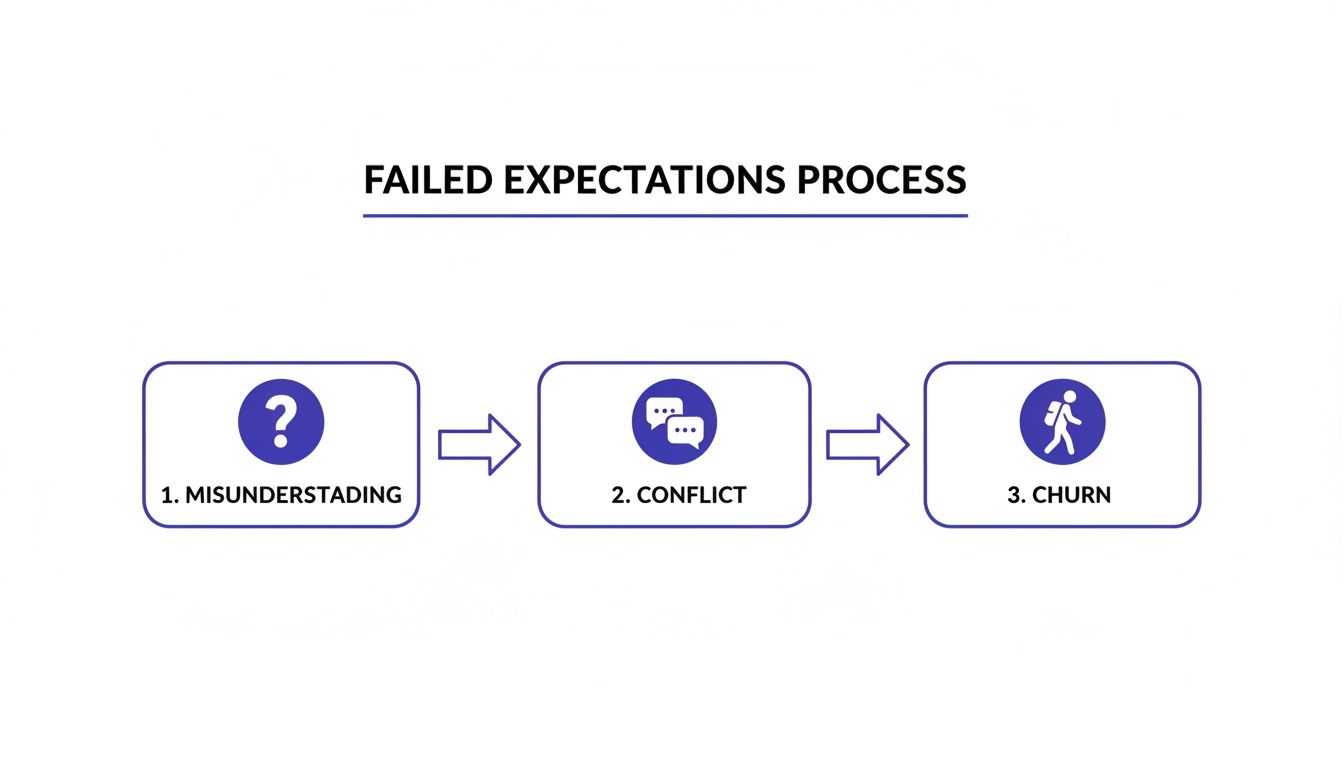
That initial misunderstanding is the tiny crack that eventually causes the entire project to crumble.
Running a Purposeful Kickoff Meeting
The kickoff meeting sets the tone for the entire relationship. It's your first real chance to move beyond sterile email chains and forge a genuine human connection. A killer kickoff isn't a simple meet-and-greet; it's a hands-on working session designed to get everyone on the same page about goals, roles, and how you’ll talk to each other.
One of the biggest mistakes I see teams make is treating this meeting like a formality. Don't. Think of it as the project’s first major milestone. Come prepared with a tight agenda that covers not just what you'll build, but how you'll work together to get there.
The goal of a kickoff meeting is to leave with zero ambiguity. Everyone should walk away knowing exactly what success looks like, who is responsible for what, and how you'll communicate when things inevitably change.
To make your kickoff actually work, focus on getting these outcomes nailed down:
Define Success Clearly: Don't stop at deliverables. Ask the big question: "What does a home run look like for your business six months after we launch?" This frames the whole project around tangible business impact, not just checking boxes.
Establish a Communication Rhythm: Decide right then and there how often you'll meet and what tools you'll use. For example, you might agree to weekly check-in calls for progress and a shared Slack channel for quick, daily questions.
Map Out All Stakeholders: You need to know who has the final say. Nothing kills momentum faster than a surprise decision-maker swooping in at the eleventh hour with a bunch of new feedback. Get it all out on the table from the start.
Crafting a Rock-Solid Project Charter
While the kickoff meeting builds personal alignment, the Project Charter (or Statement of Work) makes that alignment official. This document is your project's constitution. It’s the formal record of the scope, objectives, deliverables, timelines, and budget that everyone has agreed to. Honestly, it’s your best defense against scope creep and misunderstandings.
Think of it as the single source of truth for your project. When a question pops up about whether a feature is included or a deadline is firm, the charter has the answer. It’s no surprise that 23% of marketing agency teams say managing client expectations is a huge pain point—and it usually stems from a weak or vague SoW.
A strong charter doesn't just list what you're doing; it draws clear lines in the sand.
To make sure everyone's on the same page, the kickoff meeting and the project charter need to work in tandem. The meeting is for discussion and agreement, while the charter is for documentation and enforcement.
Here’s a quick breakdown of how the live conversation in a kickoff maps to the formal sections of your project charter:
Kickoff Meeting Agenda vs. Project Charter Content
Agenda Item (Kickoff Meeting) | Corresponding Section (Project Charter) | Purpose |
|---|---|---|
"What are we trying to achieve?" | Project Goals and Objectives | To align on the high-level business value and success metrics. |
"What exactly are we building?" | Scope and Deliverables | To get granular on every single item that will be produced. |
"What are we not building?" | Out-of-Scope Items | To explicitly prevent future misunderstandings and scope creep. |
"Who is doing what?" | Roles and Responsibilities | To clarify ownership for approvals, feedback, and providing assets. |
"When will things be done?" | Milestones and Timelines | To set realistic expectations around key dates and review cycles. |
The kickoff meeting is where you hash out the details and get verbal buy-in. The project charter is where you put it all in writing so it becomes the undisputed rulebook for the project. Both are absolutely critical.
Investing the time and energy into a thorough discovery phase builds a resilient foundation that can withstand the inevitable bumps in the road. This upfront work pays for itself ten times over by preventing costly rework, reducing friction, and ultimately leading to a much stronger and more successful client partnership.
Keep Everyone Aligned with Proactive Communication
Alright, so the project is officially kicked off. Now the real work begins—and I'm not just talking about the design or development. I'm talking about the constant, careful work of managing expectations.
If there's one thing I've learned, it's that silence is the enemy of project alignment. The only way to keep your team and the client moving in the same direction is through proactive, consistent, and crystal-clear communication. This isn't just about sending a weekly email summary; it's about creating a rhythm that builds trust and makes the client feel like they're truly part of the process.
When you go quiet, clients start filling in the blanks themselves. And trust me, their assumptions rarely line up with what's actually happening.
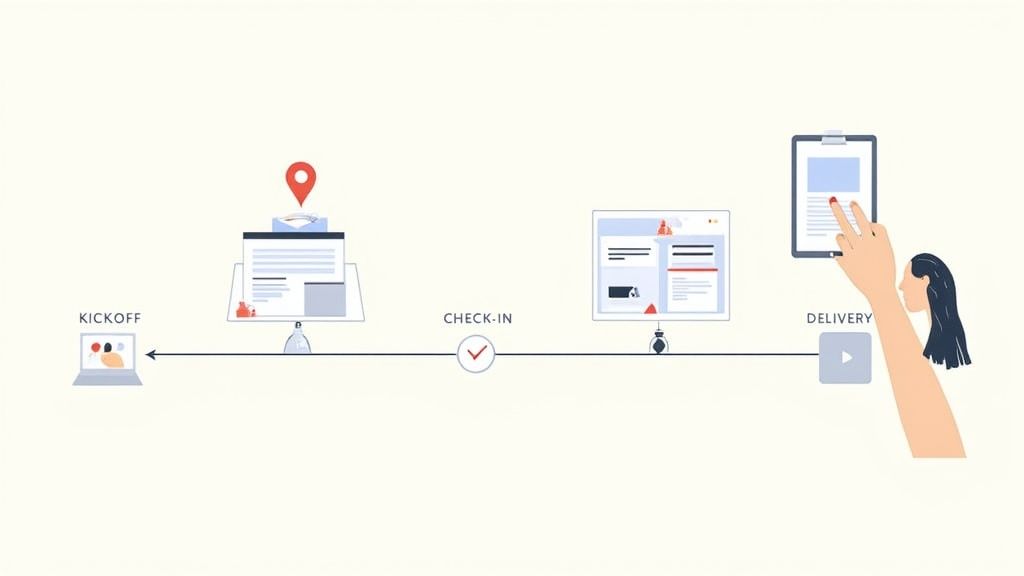
This diagram might look simple, but that little "check-in" box is where projects either succeed or fall apart. It’s where relationships are made or broken.
How to Run Check-In Calls That Actually Work
We've all been in those weekly check-in calls that feel more like a performance than a productive meeting. To make them count, you need to ditch the vague agenda and get straight to the point. Everyone's time is valuable, so let's respect it.
Instead of just asking, "So, how's it going?" frame your calls around these three things:
What We Did: Kick things off with a quick, tangible summary of what your team accomplished since the last call. Don't just list off tasks. Connect them back to the project milestones so the client sees real progress.
What's Next (and What We Need): Lay out the plan for the upcoming week. This is your moment to clearly state what you need from the client—feedback, content, approvals—and give them a firm deadline. No ambiguity.
Roadblocks and Risks: This part is critical. I can't stress this enough. Proactively flag any potential issues before they spiral into real problems. This single act builds massive trust and shows you're a strategic partner, not just someone taking orders.
The whole point of a check-in isn't just to report status; it's to reinforce alignment. Every call should end with both sides knowing exactly what’s been done, what’s coming next, and what hurdles might be on the horizon.
Ditch Vague Updates for Radical Clarity
The words you choose in your updates matter. A lot. Vague language breeds anxiety and doubt, while specific, confident updates build momentum and trust.
Let's look at a quick before-and-after:
The Vague Way: "We're making good progress on the homepage design and should have something for you to review soon."
The Clear Way: "We've finished the homepage wireframes, incorporating the user flow we agreed on Tuesday. Our designers are applying the visual branding on Thursday and Friday, and you'll have the first mock-up in your inbox for feedback by EOD Friday, just as planned."
See the difference? The second example is bulletproof. It confirms what was done, outlines the next steps, and reaffirms the deadline, leaving zero room for misunderstanding. This is the level of detail you need.
Use a Communication Matrix
Not everyone on the client's side cares about the same things. The CEO doesn't need to know about a minor bug fix, and the marketing manager needs more than a high-level budget snapshot.
A simple Communication Matrix solves this. It defines who gets what info, when they get it, and how. This is a core part of any solid communication strategy. If you want to go deeper, we've put together a handy project communication plan template.
Here’s what a basic one looks like:
Communication Type | Audience | Channel | Frequency |
|---|---|---|---|
High-Level Status Report | Executive Stakeholders | Email Summary | Bi-weekly |
Detailed Progress Update | Project Lead | Weekly Check-in Call | Weekly |
Daily Standup Notes | Core Project Team | Shared Slack Channel | Daily |
Visual Feedback Request | Design Approvers | Beep | As Needed |
This little tool ensures the right people get the right information without creating a firehose of notifications for everyone else.
Stop Drowning in Feedback Emails
We've all been there: an endless email chain with vague feedback like "can you make the logo pop more?" It's a project manager's worst nightmare and a huge time-sink.
This is where visual feedback tools are a lifesaver. Tools like Beep let clients click directly on a webpage or design mock-up and drop a comment right where it's needed.
Each piece of feedback automatically includes a screenshot and technical data, giving your team perfect context. No more guesswork. This turns ambiguous requests into clear, actionable tasks for your team.
This approach is more important than ever. Customer support teams are feeling the heat, with 87% reporting that client expectations have skyrocketed in the past year. In some markets, 46% of customers now expect a response in under four hours. That's a ton of pressure. By giving clients a tool for clear, immediate feedback, you cut down on the frustrating back-and-forth that kills both morale and momentum.
By combining a smart communication plan with the right tools, you create a system that keeps everyone on the same page and moving toward the finish line.
Navigating Scope Creep and Difficult Conversations
Look, even the most buttoned-up projects can go sideways. It happens. A key stakeholder asks for "just one tiny tweak" that ends up derailing an entire sprint, or an unexpected bug pops up and throws your timeline into chaos. How you handle these moments is what separates the good agencies from the great ones.
These tough conversations aren't just about protecting your bottom line. They're about proving your value. When you tackle scope creep head-on, you're not being difficult; you're reinforcing your expertise and guiding the project toward a successful finish. It’s a chance to turn a potential conflict into a moment that actually strengthens the client’s trust in you.

Spotting and Stopping Scope Creep
Scope creep is the project killer that sneaks in quietly. It usually starts with a request that feels too small to make a fuss about. But trust me, those little additions pile up fast, burning through your budget, pushing back deadlines, and quietly building resentment on your team. It’s a huge issue—one survey found that 41.1% of digital marketing pros say managing client expectations is a major struggle, and scope creep is often the main villain.
You have to spot it the second it happens. Any request—no matter how small—that falls outside the deliverables, features, or revision rounds you both agreed to in the Statement of Work (SoW) is, by definition, scope creep.
Here’s my go-to process for shutting it down professionally:
Acknowledge and Validate: Always start on a positive note. Something like, "That's a fantastic idea for improving the checkout flow," shows you're listening and you value their input. You're on the same team, after all.
Point Back to the Plan: Next, gently bring the conversation back to the SoW. You can say, "I love that idea. It’s not in the current scope we mapped out, but let's talk about what it would take to get it in there."
Introduce a Change Order: Frame it as an add-on, not a roadblock. Explain that you’re happy to scope out their new request and will put together a quick change order detailing the impact on the timeline and budget.
This approach turns a confrontational "no" into a collaborative "yes, and here's how we do it." To really nail this, understanding the ins and outs of mastering project scope creep is a must.
The Fine Art of Saying "No"
Sometimes, a client's request isn't just out of scope—it's genuinely a bad idea that would hurt the project's goals. Your job as the expert is to protect the client from themselves. This is where you really earn your stripes. The trick is to say no constructively.
Never just give a flat "no." Instead, explain why and connect your reasoning back to the objectives they gave you in the first place.
For instance, say a client is dead-set on adding a flashy, resource-heavy animation to their homepage. You could respond with:
"I totally get wanting to add some more visual pop here. But when we went through discovery, we learned that this audience really values speed and a super-simple user experience. An animation this heavy could slow down the page load, which might actually hurt the conversion goal we're aiming for. What if we explored a more subtle effect that adds that premium feel without risking performance?"
This response does three things beautifully: it validates their request, explains the risk by referencing their goals, and offers a smart alternative. You're not just shooting down their idea; you're actively steering the project toward success. We dig into this even more in our guide on how to avoid scope creep with key strategies.
Handling Other Awkward Scenarios
Scope creep isn't the only curveball you'll face. Your real value shines when you can handle any tricky situation with grace.
Here are a few other common messes and a quick playbook for getting through them:
The Ghost Stakeholder: The main decision-maker has gone completely dark, and you can't move forward without their sign-off. Don't just wait. Send a polite but firm email outlining what you need, the deadline for their feedback, and what will happen if you don’t hear back (e.g., "If we don't get feedback by EOD Friday, we'll move ahead with Option A to keep the project on track.").
The Last-Minute Reversal: A client suddenly wants to change something that was approved and signed off on weeks ago. Stay calm. Remind them of the sign-off date and explain that while you can definitely make the change, it will require a formal change order to adjust the timeline and budget accordingly.
You Missed a Deadline: Your team is behind. It happens. The worst thing you can do is hide it. Get in front of it immediately. Be transparent about why there's a delay, present a clear, revised timeline, and explain exactly what you're doing to get things back on course. Owning your mistakes builds way more trust than pretending they didn't happen.
The project is live. That final invoice is paid. You'd think your job is done, right? Not even close.
This post-launch phase is where the magic really happens. It's the moment a client relationship either cements into a long-term partnership or just... fizzles out. Getting this transition right is what separates the one-off vendors from the partners they can't live without.
Think about it: launching a project is a huge milestone, but it's not the finish line. If you don't have a clear plan for what comes next, clients can feel like you've just pushed them out of the nest. That's when you start getting panicked emails about minor glitches or frustrated messages about a lack of support. A smooth handoff is your last, best chance to show them you're a pro and set the stage for more work down the road.
Executing a Smooth and Empowering Handoff
A great handoff isn't just about dumping a bunch of login credentials in their lap and wishing them luck. It's about empowering your client to take ownership of their new site or product with total confidence. The whole process needs to be structured, thorough, and leave zero room for confusion.
Your main goal here is to make sure the client feels totally equipped to handle things without pinging you for every little question. I've found a mix of solid documentation and some hands-on training works best.
Here's what a successful project handoff always includes:
Comprehensive Documentation: I'm talking about a centralized "handbook" that covers everything. This should have all the login details, a walkthrough of the content management system (CMS), and simple instructions for common tasks they'll need to do, like updating text or swapping out an image.
Live Training Session: Get the key players on the client's team on a recorded video call. Walk them through the backend yourself. This gives them a chance to ask questions in real-time, and you can send them the recording afterward so they have a resource to fall back on.
A Clear "What's Next" Roadmap: You need to explicitly outline what the next 30 days look like. Define what your team will be monitoring, what the client is now responsible for, and—most importantly—when your official project support period comes to an end.
Defining Ongoing Support with an SLA
So, what happens after that initial 30-day support window closes? This is where a Service Level Agreement (SLA) is absolutely critical. An SLA is a formal agreement that lays out the terms of any ongoing support. It sets firm boundaries around response times, your availability, and exactly what kind of work is (and isn't) covered.
Honestly, without an SLA, you're setting yourself up to become a permanent, unpaid help desk. This agreement clarifies the rules of engagement for any future work or support tickets.
An SLA isn't just a stuffy contract; it's an expectation-management tool. It protects your team's time and gives the client a clear, reliable process for getting help when they need it. It prevents a ton of frustration on both sides.
This simple document is one of the most powerful tools you have for keeping the relationship healthy and productive long-term.
And the financial impact of getting this wrong is staggering. Globally, businesses lose $3.7 trillion every year from poor customer experiences. In the US alone, 74% of customers reported having a bad service experience in 2022. By setting these clear post-launch guidelines, you're tapping directly into the fact that 88% of people are more likely to buy again after a good experience. You can check out more customer service statistics that really drive this point home. You're not just finishing a project; you're building recurring revenue.
Using a Retrospective to Build Future Business
Finally, about a month after launch, schedule a post-project retrospective. This meeting is your chance to get some honest feedback, celebrate the wins, and talk about what could have gone better.
But more importantly, it’s a completely natural way to start talking about what's next. By showing you genuinely care about their feedback and are invested in their success, you open the door for a continued partnership. It’s the perfect time to ask, "So, what's Phase 2?"
Got Questions About Managing Client Expectations? We've Got Answers.
Even with the slickest process, you're still dealing with people. And people can be... unpredictable. This is where the real work of managing expectations happens. Here are a few common curveballs I've seen over the years and how to handle them without breaking a sweat.
What Do I Do If a Client’s Expectation Is Totally Unrealistic?
First, don't panic. And definitely don't just say "no." When a client asks for the moon on a shoestring budget and a weekend timeline, it's not a roadblock—it's a chance to guide them and show them why they hired an expert.
Your best bet is to hear them out, validate their ambition, and then gently bring them back to Earth.
Let's say they want a massive, complex feature built in a week. Instead of laughing, try something like this: "I love the thinking behind that feature; it's going to be a huge win. From experience, building something this solid and bug-free usually takes about three to four weeks. Let's pull up the project plan and see if we can shift some priorities around to make room for it, or maybe we can plan it for the next phase."
See what that does?
It shows you're on their team, not against them.
You immediately frame the conversation around real-world constraints like time and quality.
It offers a collaborative way forward instead of shutting them down.
How Do I Handle All the Different Client Personalities?
Client management is anything but one-size-fits-all. You've got to learn to read the room and adapt your style. It's a bit like being a chameleon.
Over the years, you'll meet a few recurring characters:
The "Big Picture" Visionary: This client is all about the end goal but their eyes glaze over when you get into the weeds. Keep your updates high-level. Focus on how the work is hitting their major business goals, not on the tiny details of how you got there.
The "Micromanager": This person wants to be in on every single decision. The key here is to give them a sense of control without letting them derail the project. Offer more frequent, detailed updates and use tools like a shared Trello board where they can see progress. It satisfies their need for info without clogging up your day.
The "Ghost": You know the one—they disappear for days, leaving you stuck waiting for feedback. The only way to handle this is to set crystal-clear expectations about feedback timelines from day one. Be direct about the consequences: "Just a heads-up, if we don't get feedback on the designs by Friday, the launch date will have to shift."
When Is It Time to Fire a Client?
This is the tough one. But sometimes, no matter what you do, a client relationship just turns sour. Knowing when to cut your losses is a critical skill for protecting your team’s sanity and your bottom line.
Keep an eye out for these red flags. One might be a fluke, but a pattern is a problem.
Endless Scope Creep: They constantly try to sneak in more work without ever wanting to talk about a change order or adjusting the budget.
Zero Respect: They're rude, condescending, or just plain ignore your team's professional boundaries and working hours.
Always Paying Late: You're not a bank. If they consistently miss payment deadlines and cause you cash flow headaches, that's a massive issue.
Fundamentally Misaligned: You realize their core values or their vision for the project are just completely at odds with yours, leading to constant friction.
Walking away is always the last resort. But trust me, staying in a partnership that drains your team's energy and kills morale will cost you far more in the long run. If you've tried everything and nothing's changing, it's time for a professional, honest chat about ending the engagement.
Ready to stop drowning in confusing feedback emails and start delivering projects faster? With Beep, you can get clear, contextual feedback directly on your live website, turning ambiguous requests into actionable tasks. Streamline your review process and save hours every week. Get started with Beep for free.
Comments