
.png)
10 Client Communication Best Practices for Seamless Projects in 2025

In fast-paced project environments, technical skill and strategic planning are only part of the equation. The true differentiator between a struggling project and a resounding success often lies in the quality of client communication. Misaligned expectations, endless revision cycles, and frustrated stakeholders are almost always symptoms of a communication breakdown, not a failure of talent. When communication falters, even the most brilliant work can miss the mark, leading to scope creep, budget overruns, and damaged relationships. This is why mastering client communication best practices is no longer a soft skill; it’s a core business competency that directly impacts your bottom line.
This guide moves beyond generic advice to provide a definitive roundup of 10 actionable client communication best practices. We will explore specific, repeatable strategies for every project phase, from initial onboarding to final handoff. You won't find vague platitudes here. Instead, you'll get concrete steps, short scripts, and real-world examples to guide your interactions. We will also demonstrate how to implement these practices effectively using modern tools like Beep, seamlessly integrating with your existing workflows in Slack, Jira, and Notion.
By implementing the frameworks in this article, you will learn how to:
Build unbreakable client trust and foster long-term partnerships.
Eliminate ambiguity and ensure everyone is aligned on goals and deliverables.
Streamline feedback loops and reduce time-consuming revision cycles.
Navigate difficult conversations with confidence and professionalism.
Mastering these techniques will help you reclaim hundreds of hours lost to inefficient back-and-forth, paving the way for smoother, faster, and more profitable projects.
1. Active Listening and Clarification
Effective client communication begins not with speaking, but with listening. Active listening is the foundational practice of fully concentrating on what a client is saying, understanding the explicit and implicit messages, and confirming comprehension before responding. This goes beyond simply hearing words; it involves interpreting non-verbal cues, withholding judgment, and demonstrating genuine engagement. By making clients feel truly heard and valued from the very first interaction, you build a strong foundation of trust, dramatically reduce misunderstandings, and ensure project alignment.

This approach, popularized by figures like Stephen Covey who famously advised to "seek first to understand, then to be understood," is a cornerstone of client communication best practices. It prevents costly rework by catching misalignments early.
Why This Practice is Essential
Active listening directly addresses the root cause of most client conflicts: miscommunication. When teams jump to conclusions or assume they understand a client's request, they risk delivering a final product that misses the mark. This practice is crucial during initial discovery calls, feedback sessions, and any conversation where critical project details are discussed. A client who feels their input is carefully considered is more likely to be a collaborative partner throughout the project lifecycle.
How to Implement Active Listening
Integrating active listening into your workflow is a conscious effort that pays significant dividends.
Paraphrase and Summarize: Regularly repeat the client's key points back to them in your own words. Use phrases like, "So, if I'm understanding correctly, the main priority for this feature is..." or "What I'm hearing is that the user flow feels too complex at the checkout stage. Is that right?" This simple act confirms your understanding and gives the client an opportunity to correct you.
Ask Clarifying Questions: Never assume. If a client uses jargon or makes a vague request, ask for specifics. For example, if they say they want a "modern design," you could ask, "When you say 'modern,' are you thinking of something minimalist with a lot of white space, or something more vibrant with bold typography?"
Embrace Pauses: Don't rush to fill silences. Pauses often mean the client is thinking deeply. Interrupting can derail their train of thought. Allowing for these moments shows respect for their process and can lead to more insightful contributions.
2. Responsive and Timely Communication
In a fast-paced digital world, the speed and reliability of your communication are direct reflections of your professionalism and respect for a client's time. Responsive and timely communication involves more than just quick replies; it’s about establishing clear expectations for response times and consistently meeting them. This practice demonstrates that you are organized, attentive, and in control of the project, which builds immense client confidence and minimizes anxiety. By acknowledging messages promptly, even if just to confirm receipt, you prevent clients from wondering if their message was lost or ignored.

This principle is heavily influenced by the customer service industry and ITIL frameworks, where Service Level Agreements (SLAs) are standard. For most non-urgent business communications, a response within one business day is now the expected norm.
Why This Practice is Essential
Unanswered emails or messages are a major source of client frustration and can quickly erode trust. A lack of timely responses can make a client feel devalued, leading them to believe their project isn't a priority. This practice is critical for maintaining project momentum, addressing potential issues before they escalate, and fostering a positive working relationship. When clients know they can count on a prompt reply, they are less likely to send multiple follow-ups, freeing up everyone's time and reducing administrative overhead.
How to Implement Responsive Communication
Setting and meeting response expectations requires a proactive and systematic approach, not just good intentions.
Establish Clear SLAs: Define your standard response times in your contract or during the onboarding process. For example, state that all non-urgent inquiries will receive a response within 24 business hours. This manages expectations from the start.
Use Automated Acknowledgments: For initial contact forms or support tickets, an automated email confirming receipt is a simple but powerful tool. It instantly reassures the client that their message has been received and is in the queue.
Proactively Schedule Updates: Don't wait for the client to ask for an update. Schedule regular check-ins, whether daily or weekly, to provide a summary of progress. This proactive approach is a hallmark of excellent client communication best practices.
Ensure Reliable Delivery: To ensure your client communications are truly responsive and timely, especially via email, it's crucial to understand and implement reliable email deliverability best practices. A sent message is useless if it lands in the client's spam folder.
3. Transparent and Honest Communication
At its core, transparent communication is the practice of being open, honest, and forthcoming with clients about all project-related matters. This includes sharing progress, admitting mistakes, and being realistic about capabilities, timelines, and potential roadblocks. It’s about building credibility by choosing candor over comfort, ensuring the client is never caught by surprise. This approach transforms the client-vendor dynamic into a true partnership, where challenges are faced together.
This philosophy, championed by proponents of Radical Transparency and vulnerability researchers like Brené Brown, posits that trust is built not in the absence of problems, but in the honest handling of them. It is a critical component of modern client communication best practices, as it fosters long-term loyalty that survives even the most difficult projects.
Why This Practice is Essential
Transparency directly dismantles the fear and uncertainty that can poison a client relationship. Hiding a minor delay or a technical issue only allows it to fester, often leading to a much larger crisis and a complete breakdown of trust. By communicating challenges proactively, you give clients the respect of being part of the solution rather than a victim of the problem. This is especially vital when dealing with budget adjustments, scope changes, or unexpected technical hurdles that impact delivery.
How to Implement Transparent Communication
Adopting a policy of transparency requires a commitment from the entire team to prioritize honesty over appearances.
Establish a 'Bad News First' Protocol: Create a standard operating procedure where any negative developments, such as a missed deadline or a bug, are communicated to the client immediately. Never wait for them to discover the problem on their own.
Pair Problems with Solutions: When delivering bad news, always present it with a proposed solution or a clear action plan. Frame it as, "We've encountered an issue with the API integration which will cause a two-day delay. To mitigate this, we have already reassigned a developer to focus solely on resolving it."
Document Key Decisions: Maintain a shared decision log in a tool like Notion or Beep. This creates a transparent record of why certain choices were made, providing context and showing the reasoning behind your team's actions, which builds confidence and accountability.
4. Personalized and Customized Communication
Just as no two projects are identical, no two clients are either. Personalized communication involves tailoring your interactions to the individual client's preferences, business context, and communication style. This practice moves beyond generic templates and one-size-fits-all updates, demonstrating a deeper level of respect and understanding. By adapting your approach to how a client best receives information, you foster a more efficient and positive working relationship, significantly enhancing engagement and trust.

This strategy has been perfected by customer-centric giants like Netflix and Amazon, who use data to customize user experiences. The core principle, championed by CRM platforms like Salesforce, is that understanding and catering to individual needs is fundamental to building lasting partnerships. This is a key component of modern client communication best practices.
Why This Practice is Essential
Personalization makes clients feel seen as partners rather than just another account number. A client who prefers quick Slack updates over formal emails will be more responsive and less frustrated. Similarly, a stakeholder who needs high-level visual summaries instead of dense technical reports will feel more confident in the project's direction. This tailored approach minimizes friction, speeds up approvals, and shows that you value their time and individual working style.
How to Implement Personalized Communication
Integrating personalization requires a proactive effort to learn about and adapt to your clients from day one.
Create a Communication Preference Profile: During onboarding, ask clients directly about their preferences. Use a simple intake form or a dedicated conversation to ask: "What's the best channel for quick questions?" or "How often would you like to receive formal status reports, and in what format?"
Document and Share Preferences: Use a CRM or a shared project management tool like Notion to document these preferences. Note their preferred channels (e.g., Slack, email, Beep), ideal times for meetings, and communication style (e.g., formal vs. informal, data-driven vs. visual).
Adapt Your Messaging: Tailor the substance of your communication. For a technically-minded client, you might reference specific Jira tickets. For a high-level executive, you might provide a concise Beep video summary of progress, focusing on business outcomes rather than technical details.
Regularly Review and Adjust: Client needs can change. Make it a point to briefly check in quarterly or at major project milestones to ask if the current communication cadence and style are still working for them.
5. Consistency Across Communication Channels
A client's experience with your brand is not a single event but a collection of interactions across many touchpoints. Maintaining a consistent tone, voice, and message across all channels-from email and Slack to formal reports and phone calls-is crucial for building a cohesive and professional brand identity. This practice ensures that no matter how a client interacts with you, the experience feels unified, reliable, and familiar. This consistency prevents confusion, reinforces trust, and lets the client know exactly what to expect.
Pioneered by omnichannel retail and integrated marketing communications, this approach treats every channel as part of a single conversation. A client shouldn't have to re-explain their issue when moving from a chatbot to a live agent, which is a core tenet of modern client communication best practices.
Why This Practice is Essential
Inconsistent communication creates friction and confusion, eroding client trust. If your project updates are formal and data-driven, but your chat messages are casual and use emojis, the client may receive mixed signals about your professionalism. Consistency is essential for managing expectations, reinforcing your brand values, and creating a seamless, predictable client journey. A unified voice makes your organization appear more organized, credible, and dependable.
How to Implement Communication Consistency
Establishing consistency requires a strategic, team-wide effort supported by clear guidelines and the right tools.
Develop Brand Voice Guidelines: Create a central document that defines your company's tone of voice (e.g., professional but friendly, technically precise, creative and inspiring), preferred terminology, and formatting rules. This guide should be the single source of truth for all team members.
Use Shared Templates: For common interactions like project kick-offs, progress updates, or feedback requests, create pre-approved templates. This ensures key information is always presented in the same way, regardless of who sends the message.
Centralize Communication History: Employ a tool that integrates communications from different channels into a single client record. This gives any team member instant context on past conversations, preventing the client from having to repeat themselves and ensuring a smooth transition between touchpoints.
6. Clear Documentation and Written Records
Effective client communication doesn't end when a call or meeting concludes. Maintaining detailed, organized documentation of all client communications, agreements, and decisions creates a single source of truth that builds accountability and provides clear reference points. This practice prevents misunderstandings caused by memory gaps, offers a layer of legal protection, and ensures project continuity even if team members change. A robust written record serves as the project's institutional memory.
This principle is heavily influenced by industries like law and finance, as well as quality management systems like ISO 9001, where meticulous record-keeping is non-negotiable. Applying this discipline to any client-facing role is one of the most vital client communication best practices for ensuring clarity and reducing risk.
Why This Practice is Essential
Verbal agreements are notoriously unreliable. A written record eliminates "he said, she said" scenarios, providing a concrete log of what was agreed upon, by whom, and when. This is critical for scope changes, approvals, and key project decisions. When a client questions a particular feature or timeline, you can refer back to the documented decision, turning a potentially contentious situation into a simple clarification. It ensures all stakeholders, including those who missed the original conversation, are aligned.
How to Implement Clear Documentation
Integrating systematic documentation into your process requires consistency and the right tools.
Follow Up in Writing: After any significant phone call or video meeting, send a brief email summarizing the key discussion points, decisions made, and next steps. Start with a simple phrase like, "Just to recap our conversation..." This creates an official record that the client can confirm or correct.
Centralize Your Records: Use a dedicated project management tool like Jira or a shared workspace in Notion to log all communications related to a project. This prevents crucial information from being lost in individual email inboxes or Slack channels, creating one accessible source of truth.
Use Clear Naming Conventions: Implement a standardized naming convention for all files and documents (e.g., ). This simple habit makes it incredibly easy for anyone on the team to find specific approvals, feedback documents, or meeting notes quickly.
7. Proactive Communication and Relationship Management
Exceptional service shifts from reactive problem-solving to proactive partnership. Proactive communication involves initiating contact, anticipating client needs before they arise, and regularly sharing valuable insights. Instead of waiting for the client to ask for a status update or flag an issue, you are consistently one step ahead. This practice transforms the client-vendor dynamic into a trusted advisory relationship, demonstrating a deep investment in their success beyond the immediate scope of work.
This approach is a core principle in modern customer success and account management models, popularized by CRM platforms and consultative selling methodologies. It builds incredible loyalty by making clients feel cared for and understood on a strategic level, which is a key tenet of effective client communication best practices.
Why This Practice is Essential
Proactive communication is the ultimate defense against client churn and dissatisfaction. It prevents small issues from escalating into major problems by addressing them early. When a client knows you are actively monitoring their account, industry, and project progress, it builds a powerful sense of security and trust. This practice is crucial for long-term retainers, high-value accounts, and any business model that relies on recurring revenue and strong client relationships. For examples of what these successful partnerships look like in action, you can explore Saeloun's client portfolio.
How to Implement Proactive Communication
Building this practice requires a system and a genuine commitment to the client's business goals. You can learn more about how this connects to building trust by managing client expectations effectively.
Establish a Cadence for Check-ins: Don't let communication be random. Schedule regular check-ins, whether it's a monthly performance email or a quarterly strategic review call. The consistency is what builds the habit and sets expectations.
Share Relevant Insights: Act as an information filter for your client. If you read an article about a new trend impacting their industry or see a competitor's successful campaign, share it with a brief note on why it's relevant to them. This provides value beyond your core service.
Anticipate Needs and Risks: Use your expertise to see around corners. For example, if you're a software vendor, proactively alert clients to an upcoming security patch. If you're a marketing agency, warn them about an upcoming algorithm change and suggest a plan.
8. Feedback Solicitation and Implementation
Proactive client communication isn't just about delivering updates; it's about actively pulling insights from your clients and visibly acting on them. Feedback solicitation is the practice of systematically gathering client input, while implementation is the crucial process of turning that feedback into tangible improvements. This two-part approach transforms clients from passive recipients into active partners, building deep-seated loyalty and ensuring your service or product evolves in lockstep with their needs.
This methodology, heavily influenced by customer success frameworks and Net Promoter Score (NPS) pioneer Fred Reichheld, treats feedback not as a complaint mechanism but as a strategic asset. By closing the loop and showing clients "we heard you, and here's what we did," you demonstrate a powerful commitment to their success, which is a cornerstone of excellent client communication best practices.
Why This Practice is Essential
Actively seeking and implementing feedback prevents client churn and fosters innovation. It addresses the silent dissatisfaction that often builds when clients feel their opinions are ignored, turning potential detractors into vocal advocates. This practice is vital for long-term client relationships, product development cycles, and service refinement. A client who sees their suggestion implemented is far more likely to feel valued and invested in your mutual success, leading to higher retention and more referrals.
How to Implement Feedback Solicitation
Creating a robust feedback loop requires structure and commitment.
Establish Regular Cadences: Don't wait for problems to arise. Implement regular check-ins and surveys, such as quarterly Net Promoter Score (NPS) questionnaires or post-project debriefs. A consistent schedule makes feedback a normal part of the relationship.
Centralize and Track Feedback: Use a dedicated system to log all client feedback, whether from a call, email, or survey. Tools like Notion or Jira can help tag, categorize, and prioritize suggestions, allowing you to spot trends across multiple clients.
Close the Communication Loop: The most critical step is communicating back. When you implement a change based on feedback, inform the client (and others who might benefit). A simple message like, "Thanks to your suggestion, we've now updated the reporting dashboard to include X," is incredibly powerful. To dive deeper, you can explore effective strategies for how to gather customer feedback that actually drives growth.
9. Conflict Resolution and Difficult Conversations
Even with the best processes, disagreements and difficult situations are inevitable in client work. How you handle conflict often defines the long-term health of a client relationship more than a perfectly executed project. This practice involves staying calm, listening to concerns without defensiveness, validating the client's emotions, and working collaboratively toward a solution. It transforms potential crises into opportunities to build deeper trust and loyalty.
This approach, detailed in frameworks like Crucial Conversations by Kerry Patterson and Joseph Grenny, is a critical component of professional client communication best practices. It's about preserving the relationship by focusing on mutual respect and a shared goal, even when faced with project scope creep, missed deadlines, or budget disputes.
Why This Practice is Essential
Unresolved conflict erodes trust, kills morale, and can lead to client churn. By addressing issues head-on with a structured, empathetic approach, you prevent small disagreements from escalating into relationship-ending disasters. This practice is crucial when delivering bad news, responding to negative feedback, or navigating scope changes. A client who sees you handle a difficult conversation professionally is more likely to trust you with their business in the future.
How to Implement Conflict Resolution
Effectively navigating difficult conversations is a skill that can be learned and integrated into your team's standard operating procedures.
Acknowledge and Validate Emotions: Before jumping to solutions, acknowledge the client's feelings. Use phrases like, "I understand why this is frustrating for you," or "It sounds like you're disappointed with the outcome, and I can see why." This de-escalates tension and shows you are listening.
Listen Completely, Then Clarify: Let the client express their full concerns without interruption. Once they are finished, paraphrase their points to ensure you understand the core issue. "So, the primary problem is that the deliverable didn't include the analytics dashboard we discussed, which has delayed your team's reporting. Is that correct?"
Focus on the Problem, Not the People: Frame the issue as a shared challenge to overcome together. Avoid placing blame. Instead of saying, "You didn't provide the assets on time," try, "There was a delay in receiving the assets that impacted the timeline. Let's figure out how we can adjust the schedule to get back on track."
Propose Collaborative Solutions: Once the problem is understood and validated, shift the conversation toward resolution. Offer concrete next steps, present a few viable options, and ask for their input. This empowers the client and makes them part of the solution.
10. Multi-Channel Communication Strategy
Meeting clients where they are is no longer a luxury; it's a fundamental expectation. A multi-channel communication strategy involves engaging with clients across their preferred platforms, whether that's email, instant messaging, phone, or video calls. This approach acknowledges that a one-size-fits-all communication plan is outdated. By offering flexibility, you reduce friction, increase responsiveness, and show clients that you respect their workflow and preferences, making it a critical component of modern client communication best practices.
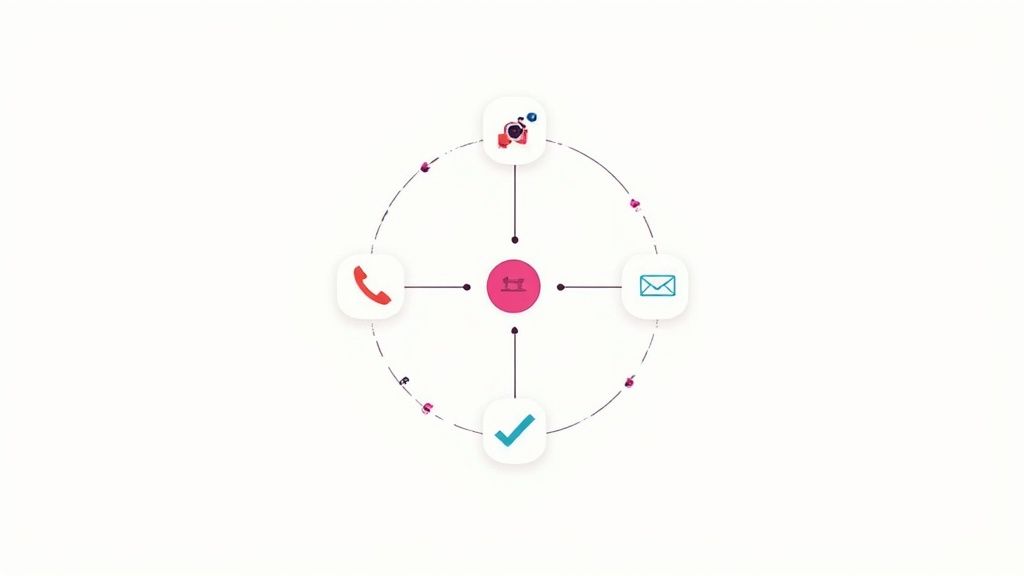
This strategy is championed by customer-centric platforms like Zendesk and HubSpot, which integrate various touchpoints into a unified view. It ensures that no message gets lost in translation when a conversation moves from a quick Slack message to a more detailed email thread.
Why This Practice is Essential
A multi-channel strategy directly boosts client satisfaction and accessibility. Forcing a client who lives in Slack to communicate exclusively over email can create unnecessary delays and frustration. This practice is vital for maintaining momentum on fast-paced projects and for building strong relationships with clients who value convenience. When clients can reach you on their terms, they feel more connected and in control, which fosters a more collaborative and positive partnership.
How to Implement a Multi-Channel Strategy
Deploying a multi-channel approach requires thoughtful planning and the right tools to maintain consistency.
Establish Channel Preferences Early: During the onboarding process, ask clients directly how they prefer to communicate for different types of updates (e.g., "Slack for quick questions, email for formal approvals"). Document these preferences in your project management tool.
Centralize Communication: Use a tool that can integrate multiple channels. A platform like Beep can centralize client conversations from various sources, ensuring your team has full context regardless of where the discussion started.
Set Clear Expectations: Define and communicate your team’s response times for each channel. For example, specify a one-hour response time on Slack during business hours and a 24-hour response for emails. This is a key part of an effective project communication plan.
Ensure Seamless Handoffs: Train your team to transition conversations smoothly between channels. If a Slack chat needs to become a video call, ensure the client doesn't have to repeat all the initial information. Use phrases like, "This is a great point. To discuss it in more detail, I've sent you a calendar invite that includes our conversation history."
Top 10 Client Communication Best Practices Comparison
Practice | Implementation Complexity (🔄) | Resource Requirements (⚡) | Expected Outcomes (📊) | Ideal Use Cases (💡) | Key Advantages (⭐) |
|---|---|---|---|---|---|
Active Listening and Clarification | Moderate — ongoing training and practice | Low–Medium — staff time, coaching | Fewer misunderstandings; higher satisfaction | High-touch services, advisory, healthcare | Builds trust; uncovers hidden needs |
Responsive and Timely Communication | Low–Medium — SLA/process setup and monitoring | Medium — staffing, automation tools | Faster resolutions; increased confidence | Support desks, sales, time-sensitive projects | Demonstrates reliability; reduces anxiety |
Transparent and Honest Communication | Low — policy and culture alignment | Low — leadership commitment, clear messaging | Long-term credibility; lower reputation risk | Crisis communications, client reporting, partnerships | Strengthens credibility; fosters loyalty |
Personalized and Customized Communication | High — data, segmentation, training | High — CRM, personalization tech, content effort | Higher engagement and conversion rates | High-value accounts, marketing, retention programs | Increased relevance; competitive differentiation |
Consistency Across Communication Channels | High — governance, templates, audits | High — documentation, integrated systems | Unified brand experience; fewer contradictions | Omnichannel brands, enterprise support | Reinforces brand; seamless client transitions |
Clear Documentation and Written Records | Medium — process discipline and templates | Medium — storage, tools, maintenance time | Accountability, legal protection, continuity | Regulated industries, long projects, handoffs | Prevents disputes; preserves institutional knowledge |
Proactive Communication and Relationship Management | High — planning, monitoring, cadence design | High — dedicated teams, CRM, analytics | Early issue detection; deeper relationships | Account management, consultative services | Increases lifetime value; positions as advisor |
Feedback Solicitation and Implementation | Medium — feedback channels and analysis loops | Medium–High — surveys, analytics, follow-up resources | Product/service improvements; client advocacy | Product development, CX programs, continuous improvement | Drives improvements; uncovers actionable insights |
Conflict Resolution and Difficult Conversations | Medium — training, escalation procedures | Medium — trained staff, authority to resolve | Preserved relationships; lessons for process fixes | Complaint handling, service failures, crises | Can increase loyalty if resolved effectively |
Multi-Channel Communication Strategy | Very High — integration, orchestration, governance | Very High — platforms, staffing, security | Greater accessibility and engagement across channels | Large-scale customer service, retail, banking | Meets client preferences; improves reach and redundancy |
From Theory to Action: Building Your Communication Flywheel
We've explored ten foundational client communication best practices, from the nuances of active listening and the necessity of proactive updates to the art of navigating difficult conversations. It's easy to see this extensive list and feel overwhelmed, viewing each practice as another isolated task to add to your already crowded to-do list. However, the true power of exceptional communication doesn't come from mastering these skills in a vacuum. It comes from understanding how they interconnect to create a self-reinforcing system, a communication flywheel that gains momentum with every positive interaction.
Think of it this way: transparent and honest communication (Practice #3) builds a foundation of trust. That trust makes clients more willing to provide candid, constructive feedback (Practice #8). When you demonstrate that you're actively listening to that feedback (Practice #1) and implementing it thoughtfully, you reinforce their trust and encourage even more open dialogue. This positive loop is the engine of a healthy client relationship.
Turning Concepts into Consistent Habits
The goal isn't to implement all ten principles flawlessly overnight. The goal is to start. The journey from good to great client communication is built on small, deliberate, and consistent actions. Your challenge now is to move from passive reading to active implementation.
Don't try to boil the ocean. Instead, focus on creating incremental improvements that will compound over time. Here are a few tangible next steps you can take this week:
Audit Your Onboarding: Review your current client onboarding process. Is there an opportunity to be more proactive (Practice #7) by setting expectations around communication channels and response times from day one? Create a simple Notion template to standardize this.
Standardize One Update: Pick one recurring touchpoint, like a weekly status update. Create a clear, concise template that covers progress, next steps, and potential blockers. This single action enhances consistency (Practice #5) and clarity (Practice #6).
Centralize Your Feedback: If client feedback currently arrives through a chaotic mix of emails, Slack messages, and meeting notes, your immediate priority is to create a single source of truth. Implementing a tool to capture and organize this input is a critical step toward a more effective feedback loop (Practice #8).
The Compounding Value of Connection
Ultimately, mastering these client communication best practices is about more than just delivering projects on time and on budget. It's about transforming transactional relationships into strategic partnerships. When clients feel heard, respected, and informed, they become more than just a line item on a balance sheet; they become advocates, champions, and long-term partners in your success.
The initial effort you invest in setting up clear processes, documenting key decisions, and personalizing your interactions pays dividends down the line. It leads to fewer misunderstandings, less scope creep, faster approvals, and a significant reduction in project-related stress. You spend less time putting out fires and more time creating value. The flywheel starts to spin on its own, fueled by mutual trust and respect. Your journey to becoming an indispensable partner begins not with a giant leap, but with the first small, intentional step you take today.
Ready to streamline your feedback process and supercharge your client communication? Beep provides a centralized platform to capture, discuss, and act on client feedback directly on any live or staging website, eliminating confusing email chains and scattered comments. See how you can implement these best practices with a single, powerful tool at Beep.
Comments