
.png)
How to Give Constructive Feedback: how to give constructive feedback for teams

Let’s be honest: giving feedback often feels awkward, and receiving it can feel even worse. Many managers put off these crucial conversations, just hoping problems will sort themselves out.
But that silence comes at a steep price. It leads to disengagement, missed opportunities for growth, and a slow decline in team performance. The old way of doing things—vague, annual, top-down reviews—just doesn't cut it in today's workplaces.

The real problem usually isn't the feedback itself, but the delivery. Comments like "be more proactive" or "show more initiative" are frustratingly ambiguous. They leave people guessing what they need to change, which only breeds anxiety and resentment.
The True Cost of Poor Feedback
Ineffective feedback isn't just a minor annoyance; it actively holds your team back. When conversations lack clarity or positive intent, they can quickly erode trust and psychological safety.
Often, these failed feedback attempts are symptoms of bigger issues bubbling under the surface. Learning how to address employee relations issues before they escalate can create a much more receptive environment for these kinds of constructive chats. Without a healthy feedback culture, small misunderstandings can snowball into significant performance problems, impacting everything from project timelines to overall team morale.
Shifting from Criticism to Coaching
The solution is to completely reframe feedback. Stop thinking of it as a critique of past failures and start seeing it as a coaching opportunity for future success. This simple shift in mindset turns a dreaded task into one of your most powerful tools for building a resilient, high-performing team.
When you treat feedback as a collaborative process aimed at shared goals, you move from judgment to empowerment. The focus becomes "how can we solve this together?" instead of "here's what you did wrong."
This approach requires you to stick to concrete, observable behaviors and their specific outcomes. It’s all about moving away from personal opinions and anchoring the conversation in a shared reality. When you get this right, the impact is huge and totally measurable.
To give you an idea of what’s at stake, let’s look at some numbers.
The Real Impact of Effective Feedback
A quick summary of the measurable benefits you'll see from building a strong feedback culture within your team.
Benefit Area | Key Statistic | What This Means For Your Team |
|---|---|---|
Engagement | 80% of employees who received meaningful feedback in the past week were fully engaged at work. | More focused, motivated, and proactive team members who are genuinely invested in their work. |
Productivity | Strengths-based feedback can increase team productivity by 12.5%. | Your team gets more done, more efficiently. Projects move faster and quality improves across the board. |
Retention | Teams with a strong feedback culture can see a nearly 15% boost in retention. | You keep your best people, reducing the high costs and disruptions associated with hiring and training replacements. |
Ultimately, this isn't just about being nice. It's about being effective and driving real business results. Focusing on great feedback is one of the smartest investments you can make in your team's success.
Setting the Stage for a Successful Conversation
Let’s get one thing straight: great feedback never, ever starts with the phrase, “Can I give you some feedback?” That question is a surefire way to put someone on the defensive, making them brace for impact. A truly successful conversation actually begins long before you say a single word. It starts by building a foundation of psychological safety. This groundwork is what makes the difference between your message being heard as a supportive act versus a personal attack.
The heart of this preparation is getting your own intentions straight. Before you even think about scheduling a chat, ask yourself: “What’s my real goal here, and how does it help this person and the team succeed?” Your objective should always be to build them up, not tear them down. This isn't about you venting frustration; it’s about giving them a clear path to get better.
When your intent is genuinely positive, it changes the entire dynamic. You stop being an accuser and become an ally.
Choose the Right Time and Place
Timing and location are so much more than just logistics. They send powerful unspoken messages about how much you respect the person and the conversation. Pulling someone aside in a busy, open-plan office screams disrespect and puts them on the spot.
Instead, find a neutral, private space where you know you won’t be interrupted. Schedule a dedicated time, even if it’s just for 15 minutes, so the person doesn't feel ambushed. A pre-scheduled meeting shows you value their time and that you’ve put thought into the discussion.
Here are a few things I’ve learned to watch out for when picking the right moment:
Avoid Fridays. Dropping tough feedback right before the weekend can leave someone stewing in negativity for two whole days.
Steer clear of high-stress periods. Don’t try to have a feedback session right before a major project deadline or an important client presentation. The timing is just off.
Check the emotional temperature. If you're feeling frustrated or the other person is clearly having a rough day, it’s almost always better to reschedule. A calm mindset on both sides is non-negotiable for a productive outcome.
This kind of thoughtful approach communicates respect and helps create an environment where the other person is actually open to what you have to say.
Creating Psychological Safety
Psychological safety is the absolute bedrock of a healthy feedback culture. It’s the shared belief that you won’t be punished or humiliated for speaking up with ideas, questions, concerns, or mistakes. Without it, even the most perfectly worded feedback will fall on deaf ears.
Globally, only 16% of employees report having deeply meaningful conversations with their managers, which points to a massive gap in psychological safety. Yet a staggering 96% of employees say that receiving regular feedback is a good thing. People want guidance, but they’ll only accept it when it comes from a place of trust.
The goal isn't just to deliver a message; it's to build a relationship where feedback is a normal, expected, and even welcome part of the workflow.
To make sure your message lands well, it's vital to continually improve your communication skills. This is all about fostering an environment where open dialogue is the norm, not the exception. You can find more great ideas in our guide on how to improve team communication, which is packed with proven ways to boost collaboration.
Use Opening Lines That Invite Collaboration
The first 30 seconds set the tone for the entire conversation. You have to nail the opening. Avoid anything that sounds accusatory or vague, and instead use language that feels collaborative and sticks to observable facts, not personal judgments.
Just look at the difference here:
Ineffective Opening (Invites Defensiveness) | Effective Opening (Invites Collaboration) |
|---|---|
"We need to talk about your attitude." | "I'd like to chat about the client meeting this morning. Can we walk through how it went?" |
"You seem really disengaged lately." | "I noticed in our last few team syncs that you've been quieter than usual. Is everything okay?" |
"You missed the deadline again." | "Let's talk about the project timeline. I saw the deadline was missed, and I want to understand what roadblocks you're facing so we can solve them." |
The effective examples are specific, focused on behavior, and open the door for a two-way conversation. They assume positive intent and immediately position you as a partner in finding a solution—which is the whole point when you're learning how to give constructive feedback.
Using Frameworks to Deliver Clear and Actionable Feedback
Ever been told to "be more proactive" or "show more leadership"? That kind of feedback feels like being handed a map with no roads. It sounds helpful on the surface, but it leaves you wondering what you're actually supposed to do. This is exactly why feedback frameworks are a manager's best friend.
Structured models aren't about turning you into a feedback robot. Just the opposite—they help you get rid of the ambiguity and emotion that can derail a conversation. By following a simple structure, you anchor the discussion in facts and specific examples, making your point objective and crystal clear.
This is especially true for corrective feedback. Believe it or not, 92% of employees say that negative feedback, when delivered well, is effective at improving their performance. The key is making it specific and behavior-focused. Frameworks give you the guardrails to hit that mark every single time.
Before you even open your mouth, a little prep work goes a long way. Thinking through your intent, the timing, and how you'll kick things off sets the stage for a productive chat.
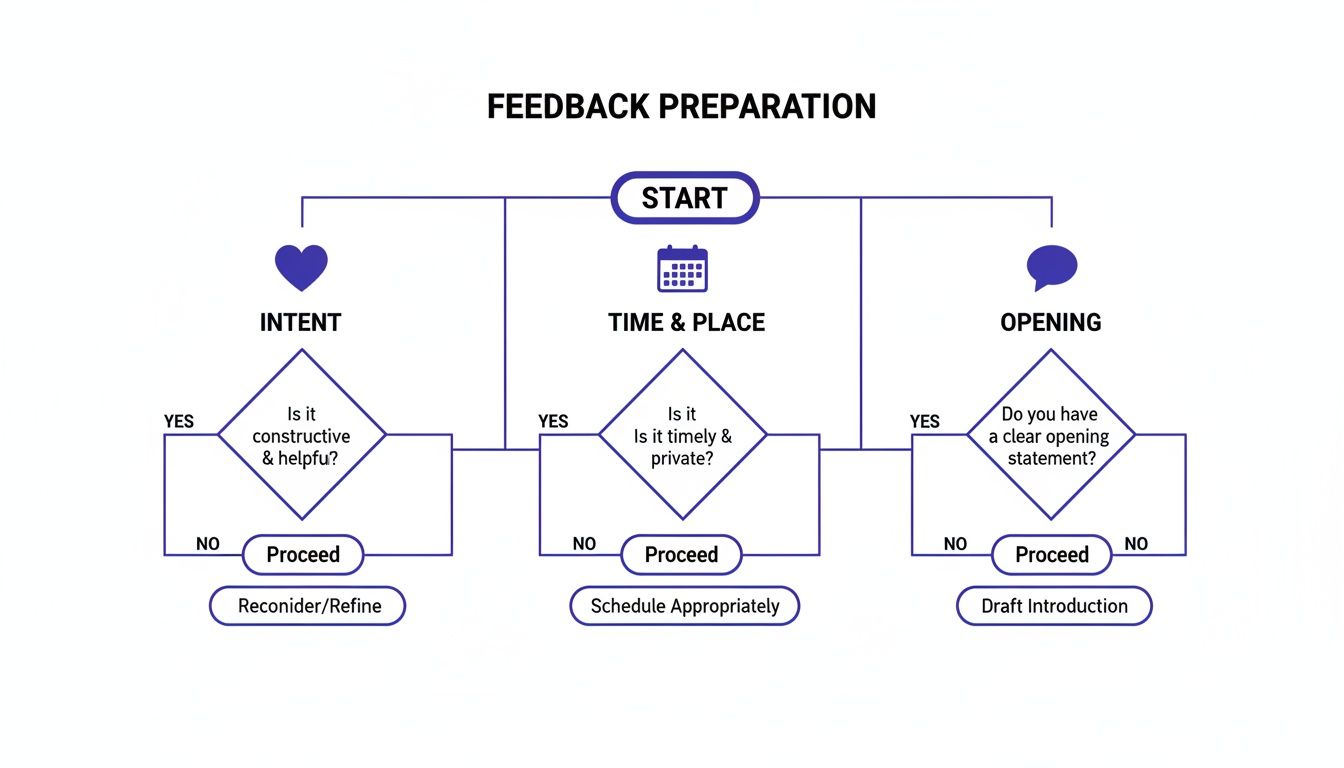
As the flowchart shows, getting your own thoughts in order first is what paves the way for a constructive dialogue instead of a difficult confrontation.
The SBI Framework for In-the-Moment Coaching
One of the easiest and most powerful models out there is SBI, which stands for Situation-Behavior-Impact. It’s my go-to for quick, on-the-spot feedback because it's concise and laser-focused on a single event.
Here’s the breakdown:
Situation: First, you ground the feedback in a specific time and place. This gives immediate context and helps the person recall the event clearly.
Behavior: Next, you describe the exact, observable actions—what the person actually did or said. It’s critical to stick to the facts here and avoid jumping to conclusions about their intent.
Impact: Finally, you connect the dots by explaining the effect their behavior had on you, the team, the project, or even a client.
Let's walk through a real-world example. Imagine a team member kept cutting off a client during a presentation.
Situation: "In the client kickoff meeting this morning when we were presenting the mockups..."Behavior: "...I noticed you jumped in to answer the client's questions a few times before they were done speaking."Impact: "...The impact was that the client seemed to get a bit flustered, and I'm worried we might have missed hearing their full train of thought on the design."
See how that works? It's direct, objective, and moves the conversation straight toward finding a solution.
The STAR Method for Performance Reviews
The STAR method is another fantastic framework. You’ve probably heard of it in the context of job interviews, but it’s just as effective for delivering more detailed feedback, especially during performance reviews. It stands for Situation-Task-Action-Result.
Think of it as telling a short story that illustrates a point.
Situation: Set the scene. What was the project or scenario?
Task: What was the specific goal they were responsible for?
Action: What concrete steps did they take to get it done?
Result: What was the outcome? What happened because of their actions?
Here’s how you could use it for positive feedback. Let's say a junior designer absolutely crushed it on a tough project.
Situation: "Remember last quarter when we were under that insane deadline for the landing page launch..."Task: "...and you were tasked with creating all the new visual assets by yourself because the senior designer was out sick?"Action: "You not only got all the assets done but also proactively built a reusable component library in Figma, which was way beyond the original scope."Result: "Because of that, the project launched on time, and the marketing team has already used that library for three other campaigns, saving us dozens of hours. That was a huge win."
This level of detail really validates their effort and shows them exactly what great performance looks like, making it much more likely they'll repeat those behaviors.
Choosing the Right Feedback Framework
So, SBI or STAR? It really just depends on the situation. One is for a quick check-in, the other for a deeper dive. This table should help you decide which one to pull out of your toolkit.
A comparison to help you decide which model is best suited for different situations, from in-the-moment coaching to formal performance reviews.
Framework | Best For | Example Focus | Key Advantage |
|---|---|---|---|
SBI | In-the-moment coaching and correcting specific behaviors. | Addressing a communication misstep in a meeting or praising a well-handled customer call right after it happens. | It's fast, direct, and easy to use on the fly for immediate course correction or reinforcement. |
STAR | Formal performance reviews, project debriefs, and analyzing past events. | Discussing a major project success or breaking down why a project milestone was missed. | It provides a complete story that connects actions to outcomes, perfect for deeper analysis and documentation. |
Ultimately, both frameworks serve the same purpose: they force you to be specific. That's the secret sauce. For more inspiration on putting these into practice, check out these 7 actionable feedback examples to improve performance. When you use a framework, you turn feedback from something people dread into a genuine tool for growth.
Turning Feedback into Trackable Actions
Let’s be honest. A productive feedback conversation is a great start, but it's only half the battle. The biggest failure point in the whole process happens after everyone leaves the room.
If your well-delivered message inspires a head nod but leads to zero change, it was ultimately a waste of everyone's time. This is where you have to bridge the gap between talking and doing, making sure feedback gets implemented, not forgotten.
The key is to end every feedback session with a clear, co-created action plan. This isn't about handing down a list of demands. It's about collaboratively agreeing on what happens next. That simple step turns a potentially awkward conversation into a forward-looking partnership, shifting the focus from past behavior to future solutions.
This follow-through is especially vital for remote teams, where things can easily get lost in translation. In fact, 40% of disengaged remote workers say they get little to no feedback, creating a void where context and clarity just disappear. You can find more data on this and its impact in these employee feedback statistics. This is exactly where modern tools can make a world of difference.
From Conversation to Concrete Tasks
The old way of tracking feedback was a mess—chaotic email threads, vague meeting notes, or worse, just relying on memory. That approach is a recipe for dropped balls and zero accountability. Today, things can be much more direct, especially for teams working on web and design projects.
Imagine leaving a comment directly on a live webpage element. That one click instantly captures a screenshot, browser details, and all the context needed to understand the issue. This is the magic of visual feedback tools like Beep, which are built to kill the endless back-and-forth that drains productivity.
Here’s what that streamlined flow looks like in action, turning a simple observation into a task you can actually track.
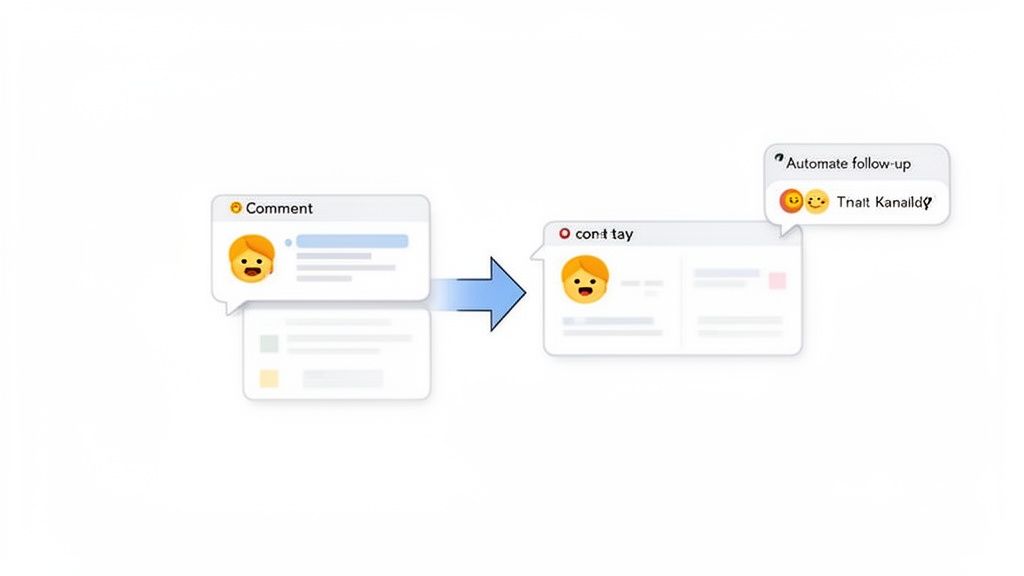
This visual process shows how a comment on a live site can be automatically converted into a task, assigned, and tracked, creating a closed loop of communication and action.
The Power of Visual and Contextual Feedback
When you deliver feedback visually, you leave almost no room for misinterpretation. Instead of describing a problem, you show it. This is a game-changer for a few key reasons:
Unmistakable Clarity: Pointing directly to a button, a chunk of text, or a layout issue is infinitely clearer than saying, "The button on the top right looks a bit off."
Automatic Documentation: Every piece of feedback comes with a screenshot and technical data (like browser version and screen size). This saves developers from having to ask a dozen follow-up questions.
Seamless Integration: The best tools don't just capture feedback; they send it where the work actually gets done. A comment can automatically create a new card in Jira, a task in Notion, or a message in a specific Slack channel.
The goal is to make acting on feedback the path of least resistance. When a comment becomes a task with one click, there are no more excuses for things falling through the cracks.
This workflow turns the abstract idea of "how to give constructive feedback" into a practical, repeatable process. It connects the "what" (the feedback) directly to the "how" (the task).
Creating an Accountable Follow-Up System
Once feedback becomes a trackable item, follow-up feels natural, not forced. It’s no longer about nagging someone; it’s about checking the status of a documented task. This shifts the dynamic from micromanagement to collaborative project management. For those looking to nail their workflow, exploring the 12 best task management software options can help you find the perfect fit.
Here are the core pieces of an effective follow-up system:
Assign Clear Ownership: Every action item needs a single, designated owner. This kills the "I thought someone else was handling it" problem for good.
Set Realistic Timelines: Agree on a reasonable deadline. A task without a due date is just a wish.
Schedule a Check-In: Don't just set it and forget it. Put a brief follow-up on the calendar. A simple, "Hey, just wanted to check in on how things are going with X" is often all it takes to keep things moving.
By making feedback visible, actionable, and easy to track, you create a culture of accountability. The conversation doesn't just end—it evolves into a documented commitment to getting better.
Handling Difficult Reactions and Following Up Effectively
So, you’ve prepped your feedback perfectly, you're using a great framework, and... they still get defensive. It happens. It’s human nature. The absolute key is not to panic or get sucked into an argument. When you feel that pushback, your only job in that moment is to listen.
Honestly, most defensive reactions come from feeling misunderstood or unfairly judged. Instead of just repeating your point louder, take a breath and really hear them out. Sometimes, just showing you're listening is enough to lower the temperature in the room and get the conversation back on track.
You don't even have to agree with what they're saying to acknowledge their feelings. The most productive thing you can do is stay calm and gently steer the conversation back to the facts and your shared goals.
Navigating Defensive Responses
When emotions are running high, your choice of words is everything. I’ve found it helps to have a few phrases in my back pocket to de-escalate the tension and bring things back to a collaborative space. You want to show you're on their side, trying to solve a problem together.
Here are a few of my go-to phrases for managing those tough reactions:
To Acknowledge Feelings: "I can see this is difficult to hear, and I appreciate you talking through it with me." It shows empathy without taking back your feedback.
To Clarify Misunderstanding: "It sounds like you feel I'm questioning your commitment. That isn't my intention at all. The goal here is just to find a way to make sure these reports get to the client on time."
To Shift to Problem-Solving: "I understand your perspective on that. Given the impact on the project timeline, what are your thoughts on how we can avoid this roadblock next time?"
These phrases work because they validate the other person's reaction while keeping the focus firmly on the problem, not the person. It turns a potential showdown into a shared challenge to solve.
The Art of the Follow-Up
Here’s a hard truth I’ve learned over the years: the real work begins after the conversation is over. Without a clear follow-up plan, even the most amazing discussion can just fade away with nothing to show for it. Following up is what turns good intentions into actual progress.
This isn’t about micromanaging. It's about showing you're invested in their success. The best follow-up is a joint effort that builds accountability and gives you a chance to celebrate the small wins along the way.
A feedback conversation is a starting point, not a finish line. Consistent follow-up and encouragement are what drive sustained improvement and build a culture of continuous growth.
It’s not just a gut feeling, either. A study with 100 employees showed a direct positive link between how much feedback they got and how well they performed. This just proves that feedback needs to be an ongoing thing, not a one-and-done event. If you're interested, you can discover more insights about the power of consistent feedback and its impact.
Creating a Simple and Effective Follow-Up Plan
A good follow-up plan doesn't need to be some complicated, multi-page document. It just needs to be clear, agreed upon, and consistent.
Here’s a dead-simple structure that ensures your feedback actually leads to change:
Agree on Next Steps Together: Before you wrap up, ask something like, "Based on our chat, what's one small thing you think you can do differently next week?" Work together to define a small, achievable next step.
Schedule a Quick Check-In: Pop a quick, 10-minute meeting on the calendar for a week or two later. This creates a natural accountability point and shows you’re serious about helping them.
Acknowledge Progress: This is huge. When you see them making an effort, say something! A simple, "Hey, I noticed you did X in the meeting today, and it made a real difference. Great job," reinforces the change and builds momentum.
When you handle reactions with empathy and follow up with consistency, you close the loop. You make sure all your effort to give good feedback actually translates into real, lasting growth for your team.
Got Questions About Giving Feedback? We’ve Got Answers
Even when you have the best frameworks in your back pocket, giving feedback can feel like you're trying to defuse a bomb. Let's be real, some situations are just plain tricky.
This is where a lot of managers get stuck. So, I've rounded up some of the most common questions I hear and broken them down with some straight-to-the-point answers. Think of this as your field guide for those curveball conversations.
What's the Real Difference Between Constructive Feedback and Criticism?
It’s easy to blur the line here, but the difference really boils down to one thing: intent.
Constructive feedback is all about the future. It’s meant to build someone up, focusing on what they can do next time. Criticism, on the other hand, tends to get stuck in the past. It just points out a mistake without lighting up a path forward.
For example, instead of dropping a comment like, "Your presentation was confusing," which is just criticism, you could try a more constructive approach. "For your next presentation, maybe we could add a summary slide at the beginning to map out the key takeaways. I think that would really help the audience follow along." The first one is a judgment; the second is coaching.
The goal of constructive feedback is to be an ally in someone's growth. It answers the question, "How can we improve this together?" while criticism just points out a flaw.
How Often Should I Be Giving Feedback to My Team?
Let’s just say it: the dreaded annual performance review is dead. Or at least, it should be. The best feedback isn't a once-a-year ceremony; it's an ongoing conversation.
The most powerful feedback I’ve seen is timely and informal, delivered right after something happens. When you do it this way, feedback just becomes part of the culture—a normal part of how you all work together, not some scary, formal meeting you have to brace for.
Here’s a simple way to think about it:
For small tweaks, go for "in-the-moment" coaching. A quick, two-minute chat right after a call can do wonders for minor course corrections.
For bigger topics, lean on your regular check-ins. Weekly or bi-weekly one-on-ones are the perfect spot to talk through progress, roadblocks, and career goals.
The aim is to get into a rhythm where feedback flows naturally in both directions. It makes the whole process less intimidating and way more valuable for everyone.
How Do I Give Feedback to a High Performer? They’re Already Great!
Ah, the high performer. Feedback isn't just about fixing problems; it’s one of your best tools for keeping your top talent from walking out the door. For these folks, you need to shift the conversation from correction to opportunity. Trust me, these are the people who are hungry for new challenges that will stretch their skills and keep them from getting bored.
Instead of hunting for something they could do better, frame the feedback around growth and impact. How can they take their existing strengths and use them in new, bigger ways?
Could they step up and mentor a junior team member?
Is there a messy, complex new project they could lead?
Can they represent the team in that big cross-functional meeting next week?
This kind of feedback shows them you’re not just managing them; you’re invested in their long-term career. That's a huge motivator.
What If They Get Defensive or Upset?
Okay, first thing's first: take a breath and don't get pulled into the emotion. A defensive reaction is almost never about you. It's usually coming from a place of feeling misunderstood or judged. Your job in that moment is to listen, not to argue your point louder.
Acknowledge their feelings. Something as simple as, "I can see this is difficult to hear," can work wonders to de-escalate the tension. It shows a bit of empathy. Then, gently bring the conversation back to the facts—the observable behavior and its impact—and remind them that you're both on the same team, working toward their success.
Ready to turn every conversation into a clear, trackable action? Beep lets you leave visual comments directly on live websites, converting feedback into tasks in tools like Jira and Slack automatically. Stop the back-and-forth and start shipping projects faster. Get started for free at justbeepit.com.
I’ve found that constructive feedback works best when it feels like a conversation, not a correction. At work, I try to focus on what actually happened, explain the impact, and ask how we can improve things together. Even small comments can go better when the timing is right and emotions are calm. I use the same approach when solving everyday frustrations, like finding the Finhabits customer service number. Clear, specific communication usually saves time and prevents misunderstandings before they grow into bigger problems.